Global Strategic Forecast
Future Procurement Trends for Hospital Ward Care Beds (2026–2035)
As healthcare networks globally recover from acute capacity strain and adapt to aging demographic profiles, the methodology for procuring a Hospital Ward Care Bed is undergoing a fundamental structural transition. Procurement officers are moving away from simple initial purchase price comparisons to comprehensive total lifecycle evaluations. Five key trends are dictating global tenders:
1. Standardized Ergonomics & IEC 60601-2-52 Compliance Enforcement
Regulatory agencies across Europe, the Middle East, Southeast Asia, and the Americas are increasingly mandating compliance with IEC 60601-2-52 (the international standard for medical bed safety). This standard specifies strict dimensional boundaries for gaps between side rails, headboards, and mattress platforms to prevent fatal entrapment hazards. Overseas hospital tenders now routinely reject non-compliant ward beds, prioritizing manufacturers like Gita Mediquip that incorporate engineered gap safety into their production molds.
2. Transition from Manual Cranks to Hybrid & Low-Voltage Motorized Beds
While manual Fowler beds remain a staple in developing healthcare sectors due to cost considerations, modern semi-private wards are rapidly adopting low-voltage (24V DC) motorized ward beds. Motorized height and backrest positioning empower patients to adjust their posture independently, reducing nurse call frequency, accelerating post-operative pulmonary recovery, and decreasing caregiver back-strain claims.
3. Advanced Anti-Microbial Surface Science
Hospital-Acquired Infections (HAIs) place a massive financial burden on healthcare facilities worldwide. Modern procurement specifications dictate advanced surface treatment protocols. Gita Mediquip utilizes a multi-stage 7-tank chemical pre-treatment followed by thermosetting epoxy polyester powder coating embedded with anti-microbial additives. This smooth, non-porous finish withstands harsh chlorine-releasing disinfectants, quaternary ammonium compounds, and automated UV disinfection systems without flaking or rusting.
4. Sustainability, ISO 14001, and Circular Product Lifecycles
Environmental, Social, and Governance (ESG) criteria have become active scoring parameters in international medical tenders. Hospitals are evaluating the environmental footprint of their equipment suppliers. Gita Mediquip’s adherence to ISO 14001 (Environmental Management) and ISO 50001 (Energy Management) ensures that ward care beds are manufactured using energy-efficient processes, recyclable CRCA steel, non-toxic coatings, and minimal plastic waste packaging.
5. Modular Hardware Adaptability & Plug-and-Play Accessories
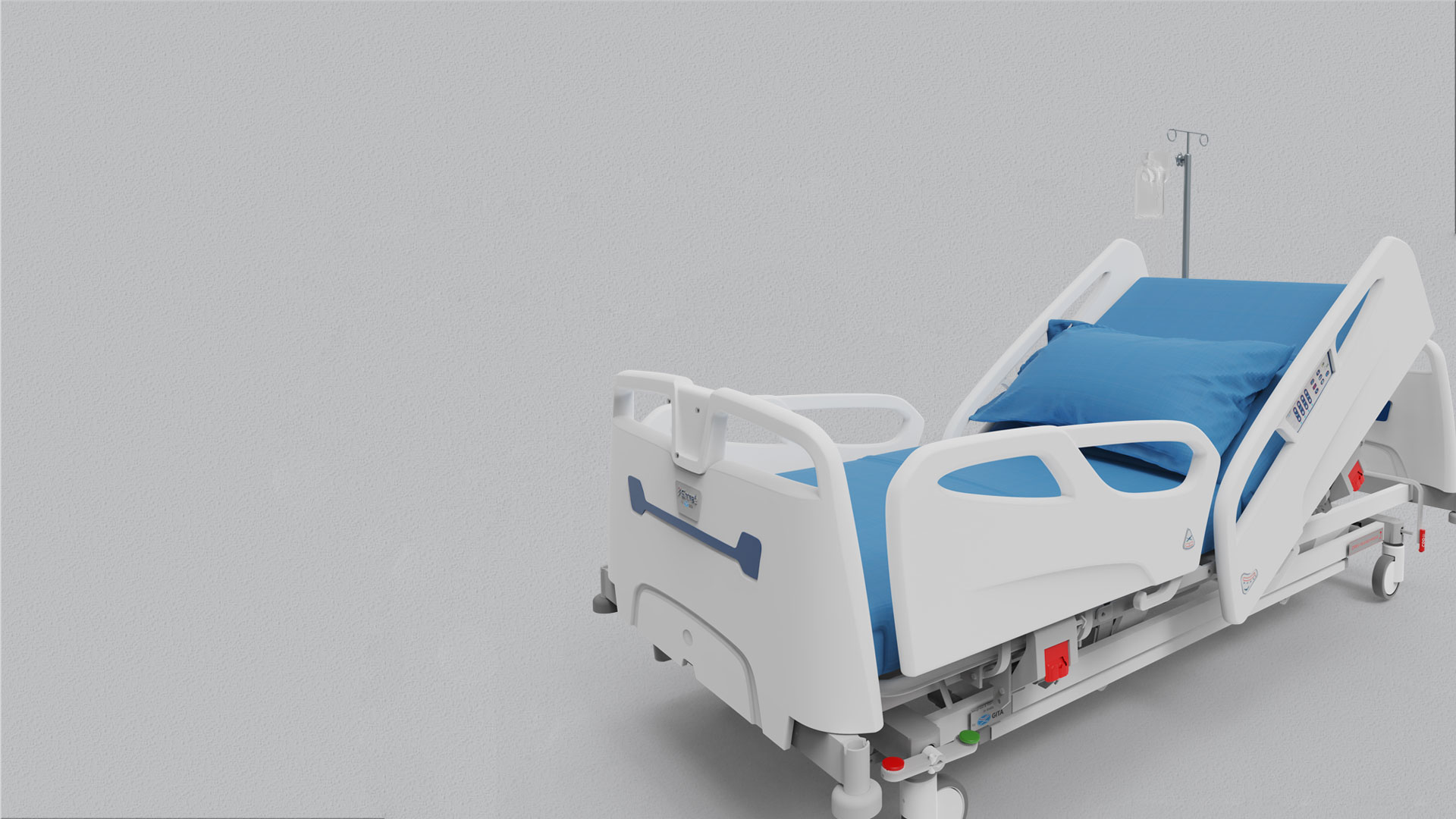
To maximize ward flexibility during patient surges or specialized clinical admissions, healthcare facilities require ward care beds capable of rapid accessory integration. Gita Mediquip ward beds come standard with multi-point sockets for telescopic IV poles, orthopaedic traction frames, urine bag holders, and chart holders, turning a standard ward bed into a specialized care station in minutes.