Industry Intelligence & Market Vision
Future Procurement Trends & Technological Developments in Fowler Beds (2026–2030)
The global hospital bed market is undergoing a rapid evolution driven by smart healthcare digitisation, infection containment mandates, and shifting international supply chains. For procurement officers and hospital planners, understanding these multi-year trends is crucial to making future-proof capital investments.
1. Integration of Smart IoT Sensors & Continuous Patient Telemetry
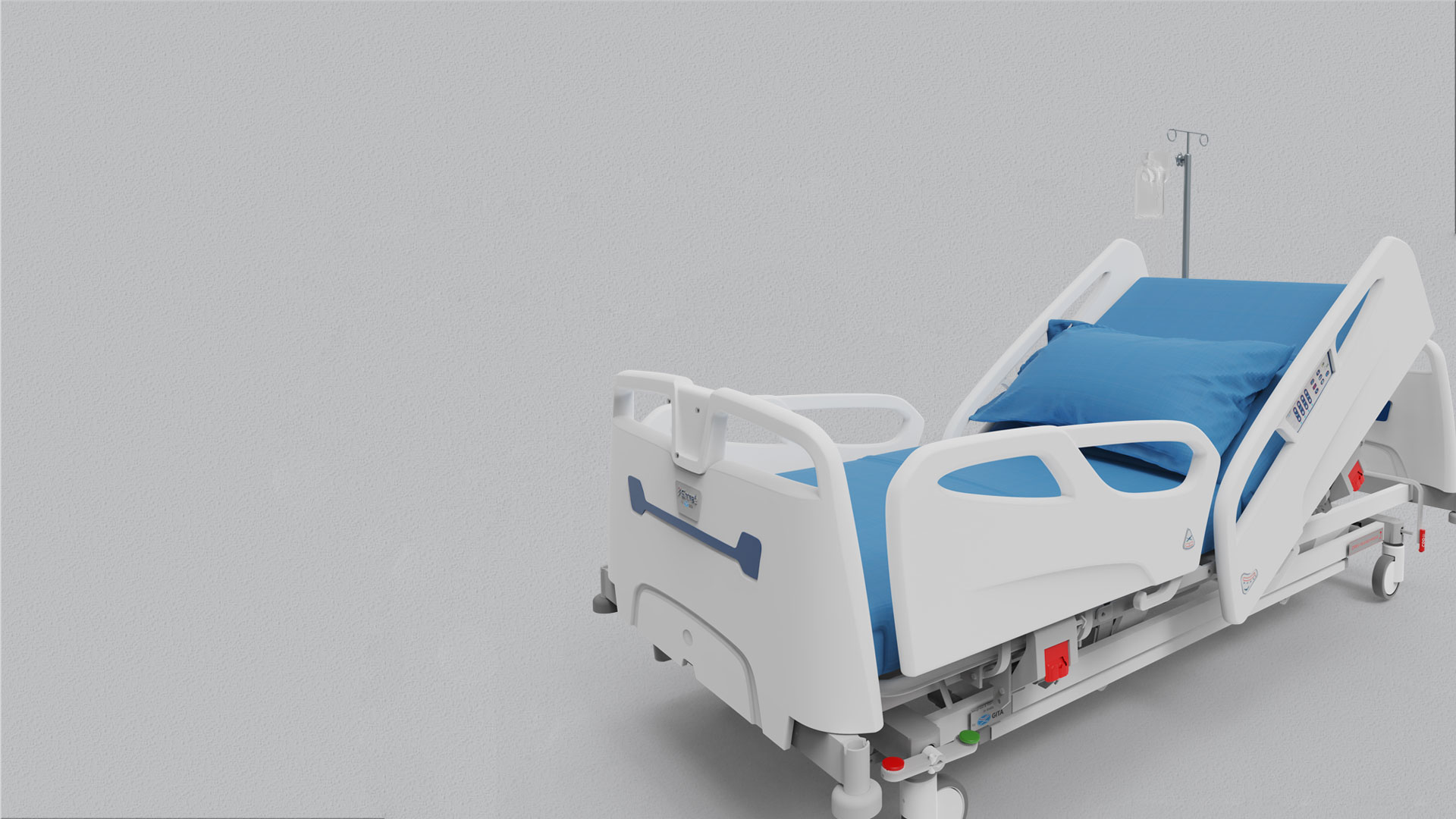
Next-generation Fowler Beds are transitioning from passive mechanical supports to active diagnostic nodes. Advanced platforms feature built-in strain-gauge weight sensors that offer real-time patient mass measurement without transferring the patient. Furthermore, integrated inclination sensors measure exact backrest angles, feeding data directly into the hospital's Electronic Health Record (EHR) system to ensure strict compliance with VAP prevention protocols (which require continuous backrest angles of >30°).
2. Antimicrobial Surface Innovations & Infection Control Engineering
In response to healthcare-associated infections (HAIs) and drug-resistant pathogens, global hospital procurement guidelines now demand zero-crevice frame geometry. Modern Fowler Beds utilize seamless blow-molded high-density polyethylene (HDPE) or ABS head/foot boards infused with silver-ion antimicrobial additives. Frame welds are continuously robotic-sealed to prevent internal moisture accumulation during automated washdown protocols.
3. Decentralized Global Supply Chains & The Rise of Indian Manufacturing Hubs
Historically dominated by expensive European and North American suppliers, international healthcare systems are increasingly diversifying their sourcing towards established Indian medical device hubs like Ahmedabad, Gujarat. Manufacturers holding ISO 13485 and CE Marking provide equal or superior mechanical durability and IEC 60601-2-52 compliance at a significantly lower Total Cost of Ownership (TCO), allowing hospitals to maximize bed capacity per dollar spent.
4. Sustainable & Decarbonized Manufacturing (SEER Principles)
Environmental, Social, and Governance (ESG) criteria have become core selection parameters in government tenders and private hospital network RFPs. Forward-thinking manufacturers like Gita Mediquip operate under the SEER Philosophy (Socially Responsible, Ethically Operated, Environmentally Sustainable, Responsible Business), leveraging ISO 50001 energy efficiency, zero VOC emissions in powder coating, and 100% recyclable structural steel.
Socially Responsible
Investing in fair labor practices, safe factory conditions, and community healthcare initiatives since 1987.
Ethically Operated
Transparent pricing, strict anti-corruption standards, and long-term client support contracts.
Environmentally Sustainable
ISO 14001 and ISO 50001 certified eco-friendly manufacturing with minimized industrial footprint.
Responsible Business
ISO 45001 workplace safety compliance combined with zero-defect quality assurance checks.