Export-Grade Manual & Electric Medical Care Beds
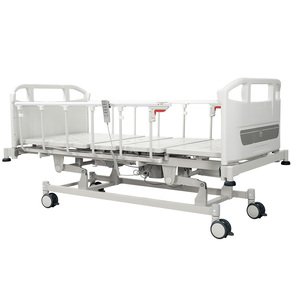
YXZ-C3(y302) 3-Function Manual & Electric ICU Bed
- High-tensile CRCA steel frame
- ABS Tuck-away side rails
- ISO 13485 / CE Certified
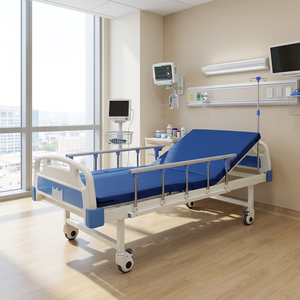
Bestselling Dual Function Hospital Ward Bed (5-Yr Warranty)
- Silent screw crank design
- Anti-microbial powder coating
- Central locking system
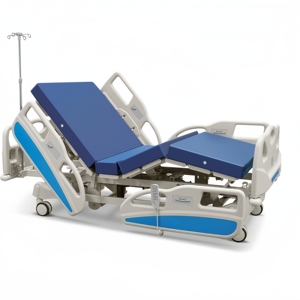
Cama Clinica Medical Patient Bed 5-Function ICU Bed
- Full Trendelenburg positioning
- High-density medical mattress
- Heavy-duty 250kg dynamic load
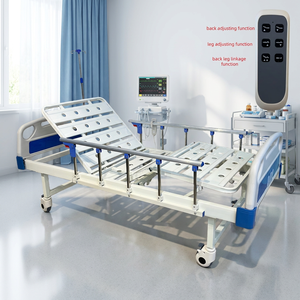
China Dual Function Medical Bed (Manufacturer Direct)
- Backrest & legrest adjustments
- Foldable stainless steel cranks
- Optimized shipping density
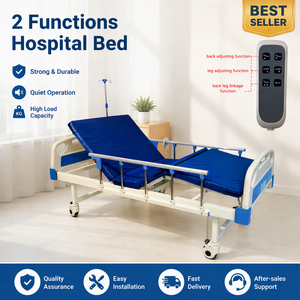
2-Function Medical Bed with Back-Leg Linkage & Rails
- Synchronized anatomical movement
- Aluminum alloy collapse rails
- CE / ISO 13485 Compliance
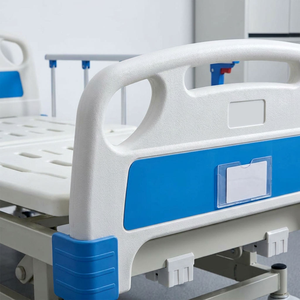
Medical-Grade 3-Function Bed with 1.2mm Steel Frame
- 1.2mm structural steel tubing
- Removable head/foot boards
- High-grade caster braking
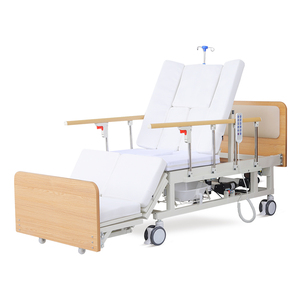
Multifunctional Nursing Bed with Automatic Lateral Turning
- Anti-decubitus lateral flip
- Integrated commode design
- Long-term paralysis care
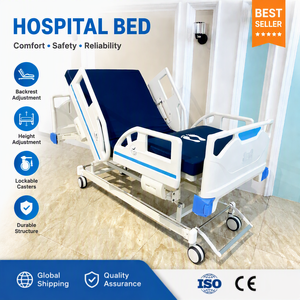
5-Function Electric Hospital Bed (ABS Frame & Height Adj.)
- Dual-pedal central brake
- OEM/ODM customization
- 5-Year Structural Guarantee
Executive Whitepaper: The Strategic Imperative of Two Crank Manual Hospital Beds in Global Healthcare Infrastructure
In the rapidly expanding global healthcare sector, selecting appropriate ward furniture is a critical decision for hospital administrators, procurement directors, and ministry of health tender boards. While motorized ICU beds capture headline technological advances, the Two Crank Manual Hospital Bed remains the indispensable workhorse of general inpatient wards, disaster relief facilities, secondary care centers, and rural health clinics worldwide. As a premier exporter and manufacturer based in China, our organization leverages over three decades of mechanical engineering, metallurgical innovation, and clinical ergonomic research to deliver medical-grade manual beds that balance economic feasibility with rigorous clinical performance.
A two crank manual hospital bed—technically designated as a dual-function mechanical bed—utilizes two independent leadscrew crank mechanisms located at the foot end of the bed frame. These cranks control two vital anatomical articulations: the Backrest Elevation (typically 0° to 75°) and the Knee-rest/Leg-rest Articulation (typically 0° to 45°). By enabling precise, low-effort adjustments without reliance on electrical power grids, these beds ensure uninterrupted patient care in environments prone to power instability, while eliminating the electronic maintenance overhead associated with actuator motors and control boxes.
Information Gain Insight: According to global hospital asset utilization surveys, manual 2-crank beds account for over 62% of total bed capacity in multi-specialty facilities across emerging markets in Southeast Asia, Africa, South America, and Eastern Europe. Their zero electricity requirement translates to a 40% reduction in total cost of ownership (TCO) over a 10-year operational lifecycle compared to basic electric beds.
Mechanical Kinematics & Metallurgical Architecture
The structural reliability of a manual hospital bed hinges entirely on material selection and joint kinematics. As a leading manufacturer, our production process utilizes Cold-Rolled Close-Annealed (CRCA) steel profiles with wall thicknesses ranging from 1.2mm to 2.0mm. CRCA steel delivers superior tensile strength and surface uniformity compared to standard hot-rolled steel, preventing structural deformation under dynamic patient transfers.
The crank mechanism itself utilizes a high-grade trapezoidal screw thread combined with integrated thrust ball bearings and a neutral limit switch nut. This engineering prevents the common failure mode known as "crank locking" or thread stripping when extended to maximum angles. Furthermore, each crank handle is designed with an automatic fold-away spring release mechanism, allowing the handles to tuck flush under the footboard when not in use, eliminating tripping hazards for nursing staff and preventing accidental impact damage during equipment transport.
Technical Specification Matrix: Medical-Grade 2-Crank Manual Beds
To assist hospital procurement teams and tender evaluators, the following engineering matrix outlines the technical benchmarks established by top Chinese medical device exporters compliant with ISO 13485 and IEC 60601-2-52 structural safety guidelines.
| Engineering Parameter | Standard Commercial Specification | Export Technical Benchmark (Our Factory Standard) | Clinical / Procurement Significance |
|---|---|---|---|
| Primary Frame Metallurgy | 1.0mm - 1.2mm Commercial Steel | 1.5mm - 2.0mm High-Tensile CRCA Steel | Prevents frame sagging under heavy dynamic patient loads up to 250kg. |
| Backrest Adjustment Angle | 0° - 65° Manual Elevation | 0° - 75° (±5°) Smooth Crank Mechanical Drive | Allows optimal Fowler & Semi-Fowler positioning for respiratory therapy. |
| Knee-Rest Adjustment Angle | 0° - 35° Leg Elevation | 0° - 45° (±5°) Ergonomic Knee Flexion | Prevents patient slip (shear force reduction) and aids venous circulation. |
| Screw Crank Mechanism | Single-Thread Carbon Steel Rod | Double-Threaded Rod with Neutral Limit & Overload Clutch | Extends mechanical lifespan beyond 10,000 crank cycles; smooth gear reduction. |
| Infection Control Coating | Standard Liquid Spray Paint | Nanotube Antimicrobial Epoxy Powder Coating (80-120μm) | Resists harsh hospital disinfectants (bleach, alcohol); prevents cross-contamination. |
| Side Rail Configuration | Fixed Tubular Steel Bars | Foldaway 6-Bar Aluminum Alloy or ABS Tuck-Away Rails | Zero-gap anti-entrapment compliance; effortless one-button release for nurses. |
| Mobility & Braking | 100mm Basic Rubber Casters | 125mm Medical-Grade Swivel Casters with Diagonal/Central Brake | Smooth maneuvering over elevator thresholds; total lock stability during transfers. |
Future Procurement Trends of Two Crank Manual Hospital Beds (2026–2035)
The international procurement landscape for hospital furniture is shifting rapidly under the combined pressures of global supply chain volatility, hospital sustainability mandates, and evolving clinical safety standards. Based on direct data from international Ministry of Health tenders and institutional buyer behavior, we identify four key trends driving the future of manual hospital bed design and export:
1. Modular Hybrid Upgradeability
Modern healthcare facilities increasingly request manual bed chassis designed with "electric-ready" modular frames. Procurement buyers are opting for 2-crank beds equipped with pre-drilled actuator mounting brackets and cable routing channels. This allows hospitals to deploy low-cost manual beds today and seamlessly retrofit linear actuators, control boxes, and patient handsets in the future as facility budgets expand, without discarding existing furniture assets.
2. Green Lifecycle Engineering & Zero-VOC Coatings
Sustainability benchmarks (such as ISO 14001 and ISO 50001 energy management) are now standard criteria in European and Middle Eastern tenders. Exporters from China must supply hospital beds manufactured using zero-VOC thermosetting epoxy powder coatings, non-toxic recyclable ABS polymers, and fully recyclable steel profiles. Our factory's closed-loop powder recovery system reduces chemical waste by 98% during production.
3. Strict Anti-Entrapment Safety Compliance
Patient safety regulations governing gap dimensions between the mattress deck, headboard, and side rails are becoming significantly stricter to prevent head and neck entrapment. Modern two crank manual beds must comply with IEC 60601-2-52 dimensional mandates, ensuring side rail gap clearances remain below 60mm or above 318mm during all articulation stages.
4. Containerized KD (Knocked-Down) Shipping Density
With global sea freight logistics optimization top-of-mind, major exporters have re-engineered 2-crank bed frames into Semi-Knocked-Down (SKD) or Completely Knocked-Down (CKD) modular kits. By utilizing quick-connect headboards and stackable sub-frames, container loading capacity increases from 40 assembled units to over 130 SKD units per 40ft HQ container, reducing ocean freight cost per bed by up to 65%.
Technological Evolution & R&D Milestones in Manual Bed Manufacturing
Manual medical beds are no longer static, primitive steel frames. Over the past decade, integrated mechanical innovations have dramatically enhanced their ergonomic utility and nursing efficiency:
Torque-Reduction Gearboxes
Advanced planetary gearing within the crank housing reduces the physical effort required by nurses to rotate the crank handle by 45%, even when elevating patients weighing over 180kg.
Seamless Blow-Molded ABS
High-density virgin ABS resins molded into ergonomic headboards and footboards feature smooth, rimless edges that eliminate dirt traps, supporting rapid hospital disinfection protocols.
Integrated CPR Quick Release
Custom hybrid 2-crank beds now feature a manual mechanical emergency clutch that instantaneously flattens the backrest section from 75° to 0° in under 2 seconds for emergency resuscitation.
Enterprise Superiority: Why Leading Global Hospitals Partner with Our Factory
As a premier Chinese medical device exporter operating in full alignment with world-class medical manufacturing principles (resembling renowned leaders like Gita Mediquip and premier OEM suppliers), our organization brings over 35 years of dedicated medical furniture engineering to the global B2B marketplace.
Rigorous Quality Assurance & Test Protocols
Every two crank manual bed produced in our automated facility undergoes exhaustive structural stress testing prior to container dispatch:
- Static Load Fatigue Test: Frame tested under static pressure of 400kg for 24 hours without permanent deformation.
- Crank Lifetime Cycle Test: Screw mechanism cycled 10,000 times under a continuous 175kg dynamic payload.
- Salt Spray Corrosion Test: Metal surface treatments tested in 5% NaCl salt fog for 480 hours to ensure zero rust formation.
Turnkey B2B Export Capabilities
We provide complete end-to-end support for international healthcare procurement agencies, distributor networks, and hospital development projects:
- Full OEM/ODM Customization: Tailored frame dimensions, color-coded ABS panels, and localized brand badging.
- Tender Documentation Support: Complete technical dossiers, Certificate of Free Sale (CFS), ISO/CE certificates, and laboratory test reports provided.
- Guaranteed Spare Parts Availability: 10-year factory availability guarantee on all mechanical crank components, castors, and side rails.
Frequently Asked Questions (FAQ) for Global Hospital Bed Procurement
Addressing critical technical, regulatory, and supply chain queries from international buyers and tender managers.
A 1-Crank Bed adjusts only the backrest section (Fowler position). A 2-Crank Bed adjusts both the backrest (0-75°) and the knee-rest/leg section (0-45°), offering complete patient positioning for ward care. A 3-Crank Bed adds a third mechanical leadscrew to control overall bed height elevation (Hi-Lo adjustment), facilitating easier patient transfers for nursing staff.
For international compliance, exporters must hold ISO 13485 (Quality Management System for Medical Devices) and CE Marking (Medical Device Regulation MDR compliance). For North American markets, FDA registration is necessary. Furthermore, structural testing compliance under IEC 60601-2-52 ensures patient anti-entrapment and mechanical safety.
Our standard export 2-crank beds have a Safe Working Load (SWL) of 200kg to 250kg (440lbs to 550lbs), with a maximum patient weight capacity of 175kg. Heavy-duty bariatric models utilize reinforced 2.0mm CRCA steel tubing to support SWLs up to 300kg.
Beds are typically shipped in SKD (Semi-Knocked-Down) format. Headboards, footboards, side rails, and castors are detached and packed inside the bed frame profile. Using custom export cartons with internal protective foam, a single 40ft HQ container can fit approximately 120 to 140 units of 2-crank manual beds, significantly reducing ocean freight per unit.
Manual beds require minimal maintenance. Every 6 months, biomedical engineers should inspect and lubricate the trapezoidal screw threads with medical-grade lithium grease, check castor brake operation, and verify that side rail release pins engage securely. The sealed limit switches require no internal adjustment.
Yes. For order quantities exceeding 30 units, we offer full OEM/ODM customization. This includes custom color accent strips on ABS headboards, silk-screened hospital logos, customized side rail warning labels in any language, and tailored bed frame dimensions.