Clinical Bed & Infusion Hardware Solutions
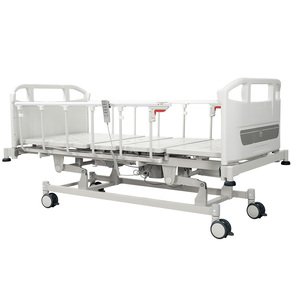
YXZ-C3 3-Function ICU Electric Hospital Bed ABS/Steel Manual ICU Bed

Bestselling High-Quality Hospital Electric 2-Function Beds (5-Year Warranty)
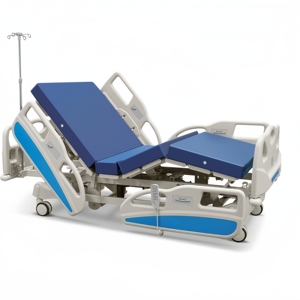
Cama Clinica 5 Function ICU Electric Hospital Bed with Mattress
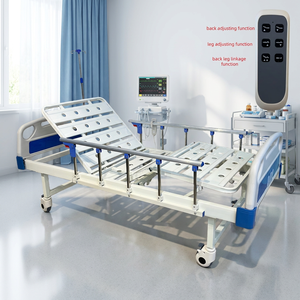
Dual Function Electric Hospital Bed Manufacturer Direct Sales
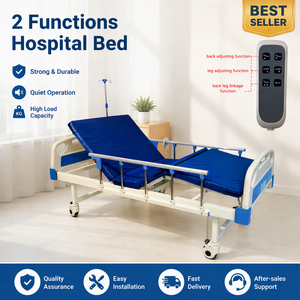
2 Function Electric Hospital Bed Back Leg Linkage Side Rails
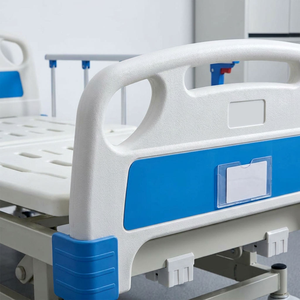
Medical Grade 3 Function Electric Bed With 1.2mm Steel Frame
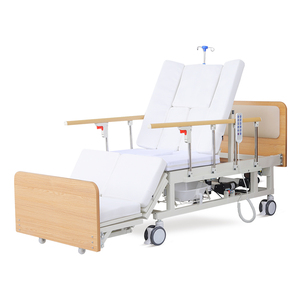
Multi-functional Electric Nursing Bed with Automatic Lateral Turning Flip
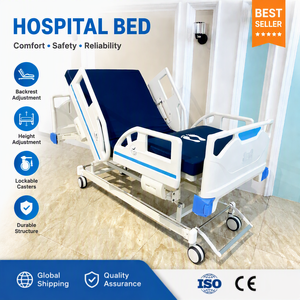
5-Function Electric Medical Hospital Bed Height Adjustable OEM
Medical-Grade Stainless Steel Infusion Stands: Industry Technical Whitepaper
In high-acuity healthcare environments such as Intensive Care Units (ICUs), Operating Theatres (OT), and Emergency Rooms (ER), the humble intravenous (IV) pole has evolved into a critical element of medical equipment architecture. No longer a passive hanging rod, modern medical infusion stands serve as mobile support platforms for multi-channel infusion pumps, syringe drivers, vital sign monitors, fluid bags, and heavy telemetry systems. Selecting the correct Custom OEM Stainless Steel Infusion Stand Manufacturer & Supplier is paramount for hospital procurement directors, biomedical engineers, and original equipment manufacturers seeking to eliminate patient safety hazards, cross-contamination risks, and structural failures.
Biomechanical stability, chemical passivation, anti-microbial resistance, and ergonomic adaptability are the four foundational pillars of hospital hardware engineering. This comprehensive technical whitepaper analyzes material metallurgy, manufacturing tolerances, international compliance frameworks (ISO 13485, CE, IEC 60601-2-52), and total cost of ownership (TCO) evaluation methods to aid health systems in establishing reliable B2B procurement benchmarks.
AISI 304 / 316L Alloys
High-chromium austenitic stainless steel providing superior resistance against aggressive medical-grade disinfectants and hospital sterilizing agents.
Dynamic Anti-Tip Base
Heavy weighted 5-star and 6-star base configurations compliant with 10° tilt safety testing under maximum asymmetric pump loading.
OEM Custom Contract
Full custom manufacturing capabilities including laser-engraved hospital branding, specific hook geometry, and custom pump rail mounting.
Metallurgy & Surface Passivation: AISI 304 vs. AISI 316L Stainless Steel
The choice of material grade directly dictates the lifespan and hygiene performance of infusion stands. Standard commercial steel or low-grade chrome-plated iron poles suffer from pitting corrosion, flaking, and bacterial colonization within months of chemical wiping. OEM manufacturing requires medical-grade austenitic stainless steel.
AISI 304 Stainless Steel: Formulated with 18% chromium and 8% nickel, AISI 304 forms a self-healing passive chromium-oxide surface layer ($Cr_2O_3$) that prevents atmospheric oxidation and resists standard surface disinfectants like isopropyl alcohol and quaternary ammonium compounds. It represents the industry benchmark for general hospital ward IV stands.
AISI 316L Stainless Steel: For high-acuity zones, operating theaters, and sterile processing areas subjected to aggressive chlorine-releasing agents, hydrogen peroxide vapor (HPV), or peracetic acid, AISI 316L is recommended. The inclusion of 2.0% to 3.0% Molybdenum significantly increases the Pitting Resistance Equivalent Number (PREN), preventing micro-crevice corrosion and microbial accumulation.
Technical Material Comparison Matrix
| Material Parameter | AISI 304 Stainless Steel | AISI 316L Stainless Steel | Chrome-Plated Mild Steel (Non-Standard) |
|---|---|---|---|
| Chemical Composition | 18% Cr, 8% Ni | 16-18% Cr, 10-14% Ni, 2-3% Mo | Low Carbon Steel + Electroplated Chrome |
| Corrosion Resistance | High (Standard Hospital Wards) | Ultra-High (OT, ICU, Sterile Zones) | Poor (Prone to flaking and rust spots) |
| Surface Passivation | Electropolished ($Ra < 0.4 \mu m$) | Electropolished ($Ra < 0.2 \mu m$) | Mechanical Polish Only |
| Sterilization Compatibility | Alcohol, Quaternary Ammonium | Chlorine, HPV, Autoclave Mounts | Limited (Degrades under moisture) |
| Lifecycle Longevity | 10 - 15 Years | 15 - 20+ Years | 1 - 3 Years |
Furthermore, state-of-the-art manufacturing involves electropolishing rather than basic mechanical buffing. Electropolishing removes surface microscopic peaks, achieving a surface roughness average ($Ra$) below 0.4 microns. This micro-smooth finish eliminates microscopic cavities where *Staphylococcus aureus* or *Pseudomonas aeruginosa* biofilms can shelter against routine hospital sanitation protocols.
Biomechanical Engineering & Stability Standard Compliance
Accidental tipping of an infusion stand in an ICU can dislodge critical central venous lines or drop sensitive volumetric infusion pumps costing thousands of dollars. The structural stability of an IV stand is governed by center-of-gravity placement, base foot-print diameter, cast iron counterbalance weighting, and caster rolling resistance.
Counterweight Base Design
Base cast iron inserts (weighing between 4.5 kg to 7.5 kg) lower the vertical center of mass, ensuring stability even when loaded with up to 4 volumetric pumps on upper hooks.
10° Tilt Incline Standard
Fully compliant with international medical device standards requiring IV stands loaded to maximum capacity to remain upright on a 10-degree inclined plane.
Anti-Winding Medical Casters
Equipped with 75mm to 100mm synthetic twin-wheel casters featuring thread guards to prevent lint/hair accumulation and soft polyurethane treads for silent ward transit.
Height adjustment mechanisms must also be engineered for single-handed caregiver operation. High-grade custom stands utilize either a high-friction aluminum collar screw-lock, a internal pneumatic dampener, or a spring-loaded one-touch button release. Pneumatic dampening systems are especially vital as they prevent the telescoping inner pole from rapidly dropping when unlocked, shielding infusion pumps from kinetic shock impact.
Custom OEM / ODM Engineering Capabilities
As an established global Custom OEM Stainless Steel Infusion Stand Manufacturer & Supplier, enterprise flexibility in engineering tailored hardware solutions is essential for medical equipment brands, hospital groups, and healthcare distributors.
Design & CAD Modeling
Collaborative 3D SolidWorks rendering, load balance calculation, and custom bracket engineering for medical pump mounting.
Precision CNC Tooling
Automated CNC laser cutting of 25mm outer & 19mm inner stainless tubing, orbital TIG welding, and robotic base bending.
Surface Passivation
Electropolishing immersion baths and electro-chemical tank passivation ensuring uniform anti-corrosion layer depth.
QC & Load Testing
100% individual inspection covering 10° tilt testing, caster conductivity check, and static 40kg vertical load verification.
Customizable Component Options
Clients can customize every structural parameter of their infusion stands to align with specific clinical requirements:
- Hook Configurations: 2-hook, 4-hook (ram-horn design), or heavy-duty 6-hook clusters rated for up to 10kg per hook.
- Power & Cable Management: Integrated medical-grade 4-socket power distribution strips (IPX4 splash-proof) with cable wrap cleats.
- Auxiliary Attachments: Stainless steel push/pull steering handles, drip tray assemblies, bottle holders, and oxygen cylinder basket mounts.
- Base Color Identification: Color-coded powder-coated base rings for instant department identification (e.g., Red for Emergency, Blue for ICU, Yellow for Isolation).
Trusted Supply Partner to Premier Healthcare Networks
Our medical furniture and custom hardware are installed across leading global healthcare chains and top-tier hospital networks:
Strategic Procurement Analysis & Future Industry Trends (2026–2030)
As hospitals transition toward digitalized patient monitoring and streamlined workflows, medical infusion stand technology is undergoing significant evolution. Procurement teams must anticipate long-term healthcare operational trends when specifying equipment contracts:
IoT & Smart Weight Sensors
Future OEM infusion stands are integrating digital load cells in IV hooks that connect via Bluetooth/Wi-Fi to central nursing stations, triggering real-time alerts when fluid bags drop below 10% volume.
Ergonomic Early Ambulation
Post-operative patient recovery protocols emphasize early walking. Next-generation stands incorporate ergonomic support rings and patient push bars, converting the IV pole into a stable walking aid.
Eco-Sustainable Lifecycle
Driven by ISO 14001 guidelines, health systems favor 100% recyclable stainless steel infrastructure over disposable plastics, achieving lower lifetime carbon footprints.
Total Cost of Ownership (TCO) Procurement Evaluation
While low-cost chrome or painted steel stands present a lower initial purchase price, their frequent failure rate, vulnerability to rust, and risk of tipping create significant hidden operational costs. Purchasing premium 304/316L stainless steel stands from a certified OEM manufacturer yields a dramatically lower TCO over a 10-year facility horizon:
| Evaluation Factor | OEM Stainless Steel Stand (Gita Mediquip Grade) | Generic Chrome-Plated Stand |
|---|---|---|
| Initial Capital Outlay | Moderate | Low |
| Expected Service Life | 12 - 15+ Years | 2 - 3 Years |
| Annual Maintenance & Part Replacement | Near Zero (< 2%) | High (Frequent caster/lock failure) |
| Infection Control & Audit Compliance | Fully Compliant (ISO 13485 / CE) | High Risk (Flaking paint, rust traps) |
| 10-Year Cumulative Cost Impact | Lowest Overall TCO | 2.5x Higher TCO due to replacements |
Frequently Asked Questions (FAQ) — Hospital Procurement & OEM
Clear technical answers to common queries raised by hospital purchasing committees, biomedical engineering heads, and international healthcare distributors.
What certifications should a reliable medical infusion stand manufacturer hold?
Why is 304 or 316L stainless steel preferred over chrome-plated steel for IV poles?
Can you manufacture custom OEM infusion stands according to our hospital bed or pump specifications?
How do your IV stands prevent tipping when loaded with multiple infusion pumps?
What type of casters are fitted on your infusion stands?
What is the typical Minimum Order Quantity (MOQ) and lead time for export orders?
How does electropolishing improve hospital infection control on IV stands?
How can procurement managers request pricing, CAD samples, or factory audits?
Ready to Partner with a Global OEM Infusion Stand Manufacturer?
Connect directly with our engineering team for custom hardware specifications, bulk pricing tenders, and ISO 13485 certified quality assurance.