Featured OEM Manual Hospital Beds
High-grade steel medical beds engineered for clinical durability, multi-function ergonomic positioning, and worldwide hospital compliance.
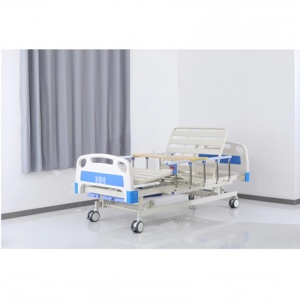
CH Manual Metal Hospital Bed Home Care Clinical Medical Bed Nursing Patient Bed
Send an Inquiry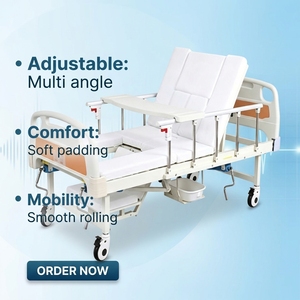
Hospital Grade Multifunctional Manual Nursing Bed with Steel Construction for Clinic Patient Care
Send an Inquiry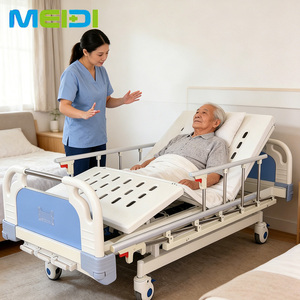
Professional High-quality Metal Electric Manual 3-Function Home Care Hospital Bed for Patients and Elderly Care
Send an Inquiry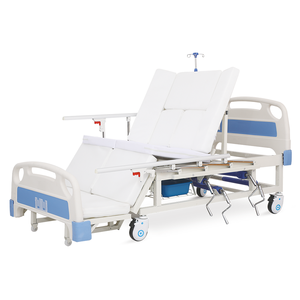
Manual Nursing Bed with Side Turning and Commode Home Care Hospital Patient Bed Adjustable Back Leg Lifting for Elderly
Send an Inquiry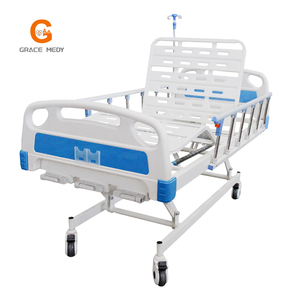
Medical 3 Function Manual Hospital Patient Bed with Three Cranks Nursing ICU Bed
Send an Inquiry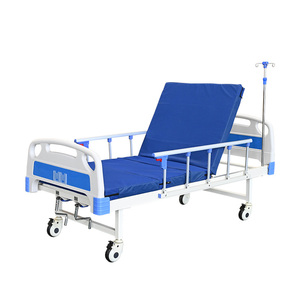
Best Selling Adjustable 2 Cranks 2 Functions Manual Clinic Medical Hospital Ward Bed for Patients
Send an Inquiry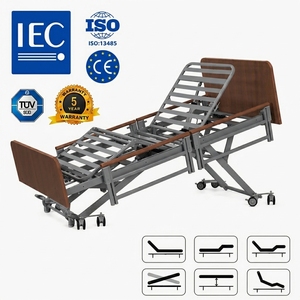
Electric Hospital Bed For Home Use Adjustable Patient Medical Bed With Rails 5-Year Warranty IEC 60601 Nursing Home Care Bed
Send an Inquiry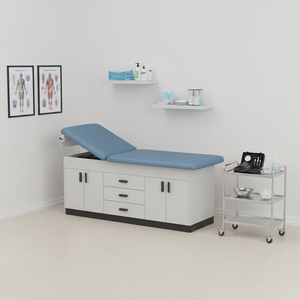
Wooden & Leather Manual Hospital Bed & Clinic Table with Cabinet 3 Drawers & 4 Doors 2-Year Warranty for Medical Examination
Send an InquiryChapter 1: Metallurgical Engineering & Architectural Foundations of OEM Manual Beds
In modern hospital procurement, evaluating custom OEM manual hospital bed factories requires a deep technical understanding of structural metallurgy, mechanical transmission physics, and infection control surface engineering. Manual medical beds serve as the foundational workhorse for hospital wards, intensive care step-down units, emergency triage, and long-term care facilities. While automated electrical beds occupy premium critical care suites, manual hospital beds remain the global industry gold standard for power-independent reliability, cost efficiency, structural resilience, and long-term maintenance simplicity.
Structural Frame Metallurgical Specifications
High-capacity manual medical beds engineered by top-tier OEM factories utilize Cold-Rolled Close-Annealed (CRCA) structural steel tubing. The physical properties of CRCA steel provide superior yield strength and resistance to torsional stress during rapid patient transfer and multi-angle articulation. Unlike basic commercial hot-rolled steel, CRCA steel undergoes precision cold-rolling, resulting in tighter wall thickness tolerances, enhanced surface smoothness, and a high tensile strength exceeding 370 MPa.
| Engineering Parameter | Standard Commercial Grade | High-Spec OEM Medical Grade | Clinical Impact / Advantage |
|---|---|---|---|
| Frame Material | Commercial Hot-Rolled Steel (1.5mm) | CRCA Structural Steel (2.0mm - 2.5mm) | Prevents structural sagging under bariatric loads up to 250kg. |
| Crank Drive Mechanism | Bare Threaded Rod & Brass Nut | Enclosed Acme Screw with Thrust Bearings | Zero backlash, smooth rotation under maximum load, 10-year life. |
| Surface Pre-Treatment | Single-stage Degreasing | 8-Tank Phosphating & Zirconium Pre-treatment | 100% adhesion for epoxy powder; zero internal rust propagation. |
| Antimicrobial Coating | Standard Synthetic Enamel Paints | Electrostatic Silver-Ion Epoxy Powder Coating | Inhibits 99.9% of MRSA, E. Coli, and bacterial surface colonization. |
| Safety Rail Entrapment | Fixed Horizontal Bars | IEC 60601-2-52 Anti-Entrapment Geometry | Eliminates neck/limb entrapment hazards for vulnerable patients. |
Mechanical Crank Gearing & Over-Crank Protection Systems
The core mechanical component of any manual patient bed is its crank system. Modern custom OEM manual hospital bed suppliers implement multi-directional Acme lead screw assemblies coupled with heavy-duty thrust ball bearings. This mechanical advantage allows nursing personnel to effortlessly raise backrests (0° to 75°), leg sections (0° to 45°), and vertical bed heights (Hi-Lo articulation) with minimal rotational torque (under 2.5 Nm).
Furthermore, premier manufacturing lines integrate automatic folding handles with over-crank limit clutch mechanism systems. When a bed section reaches its maximum anatomical limit, the clutch disengages automatically, preventing stripped threads, mechanical binding, or frame deformation caused by excessive manual force from caregivers.
Chapter 2: Turnkey Custom OEM/ODM Manufacturing & Workflow Engineering
Procurement teams for major healthcare chains, government tenders, and global medical equipment distributors rarely require standard off-the-shelf products. OEM (Original Equipment Manufacturer) and ODM (Original Design Manufacturer) capabilities are the key differentiators when selecting a factory partner in regions such as India's manufacturing hubs (e.g., Ahmedabad, Gujarat) or international industrial clusters.
1. Functional Articulation Options
Custom crank configurations ranging from basic 1-crank backrest units to advanced 3-crank Hi-Lo ICU beds, complete with lateral side-turning mechanics and integrated commode openings for specialized care.
2. Structural & Platform Tailoring
Choice of perforated steel sheet platforms, recessed wire mesh panels, or unibody ABS removable decks engineered for optimal airflow, ease of cleaning, and mattress ventilation.
3. Safety Barrier Engineering
Full-length collapsible aluminum alloy side rails, fold-down tuck-away ABS side barriers with integrated angle indicators, or custom wood-leather composite panels for VIP suites.
4. Mobility & Mobility Locks
Configuration with 125mm anti-static twin-wheel castors, individual diagonal braking systems, or centralized pedal-controlled castor lock networks for rapid ward transit.
The Turnkey 5-Stage OEM Production Lifecycle
Professional OEM factories execute a disciplined, five-stage engineering workflow to transition private-label concepts into certified medical devices:
- Requirements Freeze & CAD Modeling: Collaborative 3D solid modeling defining physical dimensions, Safe Working Load (SWL), clearance zones, and target unit cost parameters.
- Finite Element Analysis (FEA): Computer-simulated stress mapping under static loads (up to 500kg peak static force) to detect potential mechanical failure points prior to physical tooling.
- Prototyping & Robotic MIG Welding: Precision CNC tube cutting and automated robotic metal inert gas (MIG) welding to ensure 100% seam penetration and joint structural uniformity.
- Surface Passivation & Powder Coating: Automated 8-tank chemical pretreatment followed by electrostatic application of epoxy-polyester powder, cured at 200°C for superior chemical resistance.
- Compliance Testing & Packaging: Full functional testing against ISO 13485 standards, dynamic drop testing, anti-entrapment measurement, and flat-pack export palletization.
Chapter 3: Future Healthcare Procurement & Technology Trends (2026–2035 Horizon)
As global healthcare infrastructure undergoes transformation driven by aging populations, cost-optimization mandates, and heightened infection control awareness, hospital procurement officers must look beyond immediate acquisition costs. Future-proofing hospital furniture investments requires aligning purchasing specs with emerging industry trends:
1. Non-Powered Hybrid IoT Integration
The convergence of manual beds with passive IoT technology. Incorporating non-powered mechanical load cells beneath bed posts enables real-time patient weight monitoring and bed-exit alerts via Bluetooth Low Energy (BLE) modules connected to hospital telemetry systems.
2. Nurse-Ergonomic Strain Reduction
Musculoskeletal injuries among nursing staff remain a primary cause of healthcare absenteeism. Next-generation manual beds feature low-resistance internal gearboxes and gas-spring assisted backrest elevation, reducing caregiver physical exertion by up to 60%.
3. Circular Economy & Sustainable Manufacturing
Leading suppliers are aligning operations with ISO 14001 and ISO 50001 energy management frameworks. Future hospital RFPs heavily weight eco-design criteria, requiring 95%+ recyclable steel components, VOC-free powder coatings, and zero-waste factory supply chains.
Chapter 4: International Compliance, Quality Standards & Safety Protocols
Ensuring patient safety and avoiding regulatory liability requires verifying that custom OEM manual hospital bed manufacturers comply with rigorous global healthcare standards. A reputable supplier should hold multi-system ISO certifications and provide full audit documentation for international hospital tenders.
Key Medical Device Certifications Overview
| Certification | Governing Body Scope | Quality & Operational Objective |
|---|---|---|
| ISO 13485:2016 | Medical Devices Management | Validates comprehensive quality management systems specifically for design and manufacturing of medical devices. |
| IEC 60601-2-52 | International Electrotechnical Commission | Specifies mechanical safety, strength, side-rail gap dimensions, and anti-entrapment rules for hospital beds. |
| ISO 9001:2015 | Quality Management Systems | Ensures standardized manufacturing processes, lot traceability, raw material verification, and continuous improvement. |
| ISO 14001:2015 | Environmental Management | Certifies environmentally responsible manufacturing, waste chemical treatment, and minimal ecological footprint. |
| ISO 45001:2018 | Occupational Health & Safety | Guarantees safe factory working conditions, ethical labor standards, and hazard-free assembly lines. |
| CE Marking (MDR Compliant) | European Union Medical Regulation | Confirms conformity with European health, safety, and environmental protection directives for medical equipment. |
Chapter 5: Frequently Asked Questions (FAQ) for B2B Procurement
Direct answers to critical technical and commercial questions posed by hospital administrators, supply chain directors, and medical equipment importers:
Chapter 6: Enterprise Manufacturing Ecosystem & Supplier Heritage
Establishing a resilient healthcare supply chain requires partnering with an established manufacturer with proven longevity, ethical business practices, and global footprint. Rooted in over 35 years of engineering excellence (established in 1987 in Ahmedabad, Gujarat), our manufacturing ecosystem supplies top-tier hospitals globally including Apollo Hospitals, Zydus Hospitals, Manipal Hospitals, SAL Hospital, Apex Heart Institute, and HCG Care Networks.
The SEER Philosophy
Every manual medical bed is designed under our SEER Framework: Socially Responsible workplace, Ethically Operated supply chain, Environmentally Sustainable manufacturing, and Responsible Business governance.
End-to-End Quality Verification
From 100% incoming raw material steel inspection to ultrasonic weld testing and dynamic safe working load (SWL) verification, our zero-defect quality control ensures absolute safety at the patient bedside.
Worldwide Logistics Readiness
Extensive export experience spanning 20+ countries across Asia, Africa, Europe, and the Middle East. Standard export sea-worthy packaging guarantees pristine product arrival regardless of transport duration.
Whether you are outfitting a newly constructed 500-bed multi-specialty hospital, replacing legacy ward infrastructure, or expanding your medical distribution portfolio, our custom OEM manual hospital bed factory provides the engineering precision, compliance backing, and commercial scalability required for your success.
Ready to Partner with a Certified OEM Factory?
Contact our senior medical device engineering team today for technical consultations, customized OEM CAD models, bulk factory pricing, and comprehensive tender documentation.