Featured Patient Transport Stretchers & Hospital Medical Beds
Explore our Bestselling, CE & ISO13485 Certified Emergency Stretchers and ICU Transfer Beds Engineered for Global Healthcare Systems.
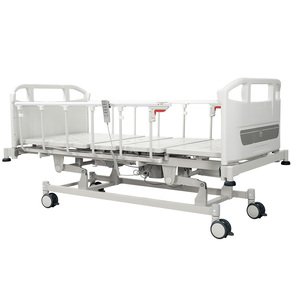
YXZ-C3 (y302) 3-Function ICU Electric Medical Transport Stretcher Bed
- ISO 13485 / CE Certified
- ABS Side Rails & Steel Frame
- 3-Motor Precision Drive
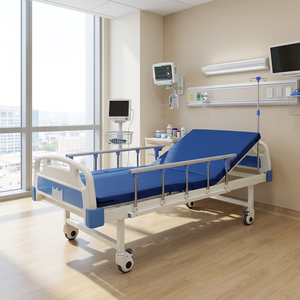
High-Quality Hospital Electric 2-Function Transfer Bed (5-Year Warranty)
- Heavy Duty 250kg Capacity
- Central Locking Castor System
- 5-Year Enterprise Guarantee
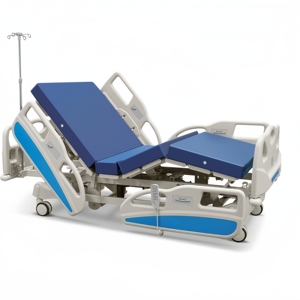
Cama Clinica 5-Function ICU Electric Patient Transfer Stretcher with Mattress
- Trendelenburg / Reverse Trend.
- Medical Grade Anti-Bacterial Mattress
- Integrated X-Ray Radio-Translucent
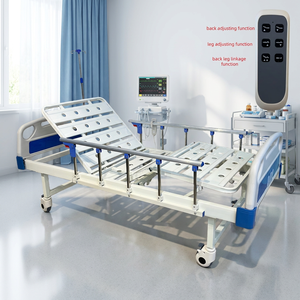
China Best-Selling Dual Function Electric Emergency Transfer Stretcher Bed
- Direct Manufacturer Wholesale Price
- High Impact Protection Bumpers
- Quick-Release Emergency CPR
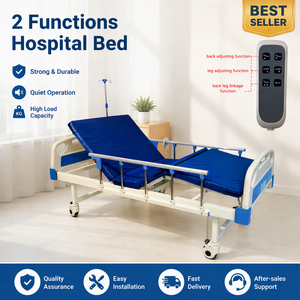
2-Function Electric Patient Stretcher Bed with Back/Leg Linkage & Side Rails
- Synchronized Back/Leg Linkage
- CE / ISO 13485 Compliance
- Foldable Collapsible Side Guard
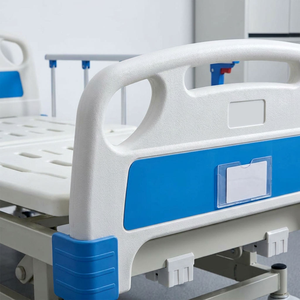
Medical Grade 3-Function Electric Stretcher (1.2mm Reinforced Steel Frame)
- 1.2mm Cold-Rolled Steel Frame
- Electrostatic Powder Coating
- Smooth Silent Swivel Castors
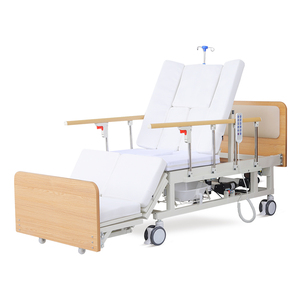
Multi-Functional Electric Nursing Stretcher with Automatic Lateral Turning
- Auto Lateral Tilting & Flip Function
- Pressure Ulcer Prevention Tech
- Ideal for Paralyzed/ICU Transfers
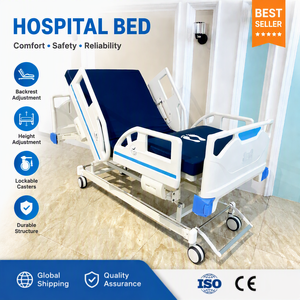
Hot Sale 5-Function Electric Medical Stretcher (Height Adjustable, ABS Frame)
- Multi-Height Variable Elevation
- Full OEM & ODM Customization
- CE ISO13485 5-Year Warranty
Why Partner with China's Premier Stretcher Exporters
Building on over 35 years of engineering heritage, state-of-the-art facilities, and international compliance, we provide end-to-end medical mobility solutions for global health tenders.
Rigorous International Certifications
Our medical transport systems hold ISO 9001 (Quality Management), ISO 13485 (Medical Devices), ISO 14001 (Environmental), ISO 45001 (Occupational Safety), ISO 50001, and CE Certification compliant with IEC 60601-2-52 standard.
The SEER Manufacturing Philosophy
Guided by responsible manufacturing: Socially Responsible community investment, Ethically Operated transparent supply chains, Environmentally Sustainable zero-waste production, and Responsible Business governance.
Trusted by World-Class Institutions
Supplying Tier-1 hospital networks and government healthcare projects including Apollo Hospitals, Zydus Hospitals, HCG, SAL Hospital, Apex Heart Institute, Manipal Hospitals, and international ministries of health.
Information Gain Note for Procurement Directors: Unlike trading companies, our direct manufacturing infrastructure encompasses cold-rolled close-annealed (CRCA) steel robotic welding, automated electrostatic powder coating lines, cleanroom assembly, and 100% load-cycle fatigue testing prior to shipment.
Architectural Trends & Innovations in Patient Transport Stretchers
The clinical landscape for intra-hospital patient transportation has undergone a paradigm shift over the past five years. Modern patient transport stretchers are no longer simple mechanical gurneys; they have evolved into complex, ergonomic critical-care mobility hubs designed to maintain vital support, reduce caregiver musculoskeletal injuries, and streamline emergency transfer protocols.
1. Hydraulic & Electric Dual-Drive Height Elevation Systems
Traditional manual crank mechanisms are rapidly being phased out across high-volume emergency departments (ED) and intensive care units (ICU). Contemporary patient transport stretchers feature dual-pedal hydraulic drives or IPX4 water-resistant electric actuators that enable rapid, effortless height adjustment (Hi-Lo range: 550mm to 890mm). This capability ensures seamless alignment with operating tables, CT/MRI scanners, and hospital beds, eliminating manual lifting strain for nursing staff.
2. Fifth-Wheel Central Steering & Advanced Brake Systems
Navigating crowded hospital corridors, elevators, and acute care wards requires precise directional control. Premier patient transport stretchers incorporate a retractable fifth-wheel steering mechanism (5th wheel technology). When engaged via foot pedal, the center wheel locks directionally, providing effortless cornering and straight-line tracking over long hospital hallways. Central braking systems engage all four 150mm/200mm silent swivel castors simultaneously, ensuring rock-solid stability during patient loading and emergency CPR procedures.
3. X-Ray Radio-Lucent Platforms & C-Arm Compatibility
Time-to-treatment is critical for trauma patients. Advanced transport stretchers utilize high-pressure laminate (HPL) or carbon-fiber composite bed decks that are completely radio-translucent. This allows emergency clinicians to perform full-body X-ray imaging and fluoroscopy using C-Arm equipment directly on the transport stretcher, avoiding risky patient transfers prior to stabilization.
4. Infection Prevention & Structural Materials
Hospital-acquired infections (HAIs) pose a multi-billion-dollar global challenge. Leading Chinese stretcher manufacturers utilize heavy-gauge CRCA steel frames treated with anti-microbial electrostatic powder coatings containing silver ions (Ag+). Seamless ABS thermoformed sub-base covers shield internal hydraulic systems from bodily fluids, while smooth-contoured fold-down side rails feature zero-gap entrapment protection conforming to IEC 60601-2-52 safety parameters.
Future Procurement Trends in Global Medical Transfer Equipment
As international health authorities upgrade trauma infrastructure and expand emergency response capabilities, global procurement departments must align their capital expenditure (CapEx) with emerging technological and regulatory shifts. Below is an authoritative forecast of key procurement drivers shaping the patient transport sector:
1. Smart IoT & Telemetry Integration
Future-proof transport stretchers are incorporating embedded IoT sensors for real-time patient weight measurement, bed-exit alarms, and Bluetooth/Wi-Fi asset tracking within hospital RTLS (Real-Time Location Systems). This prevents asset loss and integrates vital statistics directly into Electronic Health Records (EHR).
2. Bariatric Load Capacity Standardization
With rising global obesity metrics, hospital tenders increasingly demand minimum safe working load (SWL) capacities of 250kg to 300kg for standard emergency stretchers, alongside wider platform dimensions (750mm to 850mm) and reinforced hydraulic cylinders.
3. Modular Accessories & Universal Mounting
Procurement teams favor stretchers equipped with integrated IV pole sockets, oxygen cylinder holders, monitor shelves, and defibrillator trays. Universal rail systems allow instant snap-on attachment of critical care pumps during intra-facility transfers.
4. Green Supply Chain & Eco-Compliance
Hospitals adhering to ESG (Environmental, Social, and Governance) targets require suppliers certified under ISO 14001 and ISO 50001. Recyclable ABS components, non-toxic powder coats, and energy-efficient manufacturing processes are now essential tender criteria.
Comparative Technical Matrix: Standard vs. Advanced Transport Stretchers
| Technical Feature | Standard Ward Stretcher | Hydraulic Emergency Stretcher | Advanced ICU Transport System |
|---|---|---|---|
| Drive Mechanism | Manual Mechanical Crank | Dual Hydraulic Foot Pedal | Electro-Hydraulic + 5th Wheel Drive |
| Safe Working Load (SWL) | 175 kg | 230 kg | 300 kg (Bariatric Grade) |
| Radio-Lucent Platform | Optional (Partial) | Full Deck HPL / X-Ray Cassette Rail | Full Carbon-Fiber C-Arm Translucent |
| Trendelenburg Range | 0° to 12° | 0° to 18° | -18° to +18° Fast Response |
| Central Braking System | Individual Wheel Locks | Central Dual-Pedal Lock | Electronic & Central Steer/Brake |
| International Certification | ISO 9001 / CE | ISO 13485 / CE / IEC 60601-2-52 | CE / FDA / ISO 13485 / IEC 60601 |
Frequently Asked Questions (FAQ)
Essential information for hospital procurement officers, medical equipment distributors, and government tender committees purchasing from China.
What key certifications are required to export patient transport stretchers globally?
Can China suppliers customize patient transport stretchers for OEM/ODM tenders?
How are stretchers packaged to prevent damage during ocean freight transport?
What is the standard production lead time and minimum order quantity (MOQ)?
How does the 5-Year Enterprise Warranty handle spare parts supply?
Why is hydraulic elevation preferred over electric drive for trauma transport?
Streamline Your Medical Procurement Today
Connect directly with our senior engineering and export specialists to receive factory-direct quotations, technical compliance documentation, and project tender support.