Featured CE & ISO 13485 Certified ICU Beds
Engineered for high-acuity critical care environments, offering multi-function electric positioning, anti-microbial surfaces, and compliant side-rail safety containment.
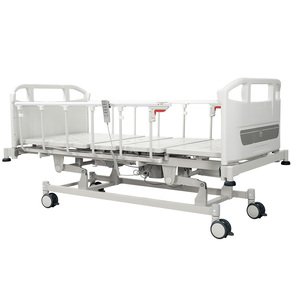
YXZ-C3(y302) 3-Function ICU Electric Hospital Bed Factory Medical Bed ABS/Steel/Metal Manual ICU Bed ISO Certified
- 3-Function Motorized Control (Back, Knee, Height)
- Heavy-duty CRCA Steel Frame with ABS Guardrails
- Ergonomic Handheld Remote & Manual Override
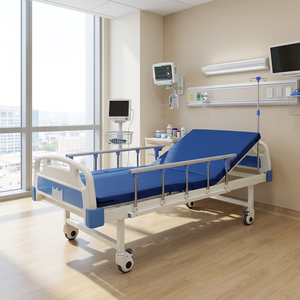
Bestselling High-quality Hospital Electric 2-function Beds With A 5-year Warranty
- Dual-Linear Actuator Motor System
- Electrostatic Anti-bacterial Powder Coating
- Central Locking Silent Braking Castors
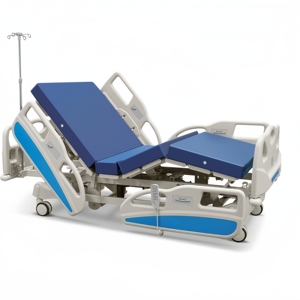
Cama Clinica Medical Patient Bed 5 Function ICU Electric Hospital Bed with Mattress
- Trendelenburg & Reverse Trendelenburg Articulation
- Integrated Nurse Control Panel & CPR Release
- Includes High-density Medical Foam Mattress
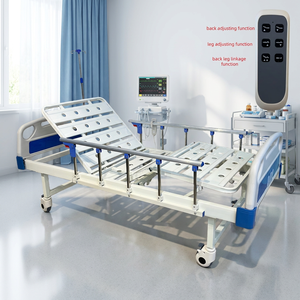
China's Best-selling Dual Function Electric Hospital Bed, Medical Bed Manufacturer Direct Sales
- High Safe Working Load (250 kg Capacity)
- Quick-fold Collapsible Aluminum Side Rails
- Seamless Thermoformed ABS Head/Foot Boards
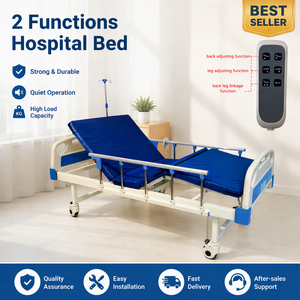
2 Function Electric Hospital Bed Multifunction Medical Patient Bed Back Leg Linkage Side Rails CE ISO13485 Factory Wholesale
- Synchronized Backrest and Legrest Elevation
- Anti-Entrapment Side Rail Spacing Compliance
- Bumper Castors at All 4 Corners
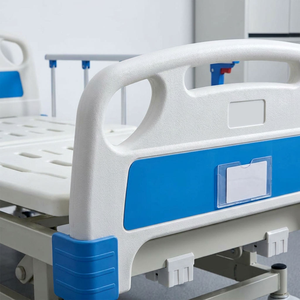
Medical Grade 3 Function Electric Hospital Bed With 1.2mm Steel Frame For Hospital Ward And Patient Nursing Care
- Reinforced Structural Cold-Rolled Frame
- Precision Dewert/Linak Actuator Integration
- Perforated Steel Mattress Platform for Ventilation
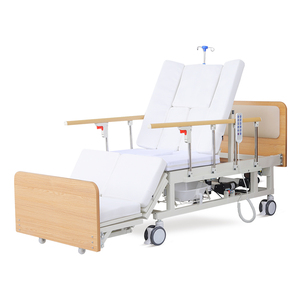
Multi-functional Electric Nursing Bed with Automatic Lateral Turning Flip for Home Care Paralyzed Elderly Medical Hospital Bed
- Programmable Auto Left/Right Lateral Tilt
- Incontinent Care Commodes Cut-out Function
- Reduces Caregiver Workload & Bedsores
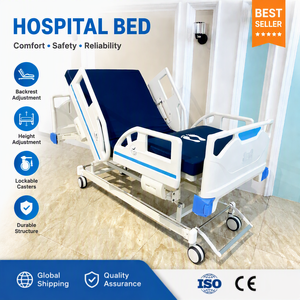
Hot Sale 5-Function Electric Medical Hospital Bed ABS Frame Height Adjustable Patient Bed CE ISO13485 OEM Available 5-Year
- Full 5-Motor Mechanical Articulation
- One-Touch Cardiac Chair & Emergency CPR
- Tente Dual-wheel Central Brake System
Engineering Supremacy & CE Compliance in Critical Care Furniture
Modern Intensive Care Units (ICUs) demand medical furniture engineered to exacting biological, mechanical, and electrical safety standards. As healthcare facilities scale their critical care capabilities, sourcing from certified CE Certified Intensive Care Unit Bed Factories becomes a fundamental requirement for regulatory compliance, risk mitigation, and superior clinical outcomes.
A compliant ICU bed serves not merely as patient rest equipment, but as an active critical care interface. Under European Medical Device Regulation (EU MDR 2017/745) and strict IEC 60601-2-52 requirements, critical care beds must maintain structural stability under extreme dynamic loads, eliminate risks of patient entrapment, provide instant emergency CPR positioning, and withstand rigorous hospital-grade decontamination protocols.
Core Technical Specifications Matrix: 2-Function vs 3-Function vs 5-Function ICU Beds
Hospital procurement committees must evaluate mechanical capabilities against clinical acuity requirements. The following matrix provides a technical baseline for architectural specification writing:
| Performance Criterion | 2-Function Electric Bed | 3-Function Electric Bed | 5-Function Advanced ICU Bed |
|---|---|---|---|
| Primary Clinical Use | General Wards / Step-Down Units | Sub-Acute & High Dependency Units | Intensive Care Units (ICU/CCU/NICU) |
| Motorized Articulations | Backrest (0-75°), Legrest (0-45°) | Backrest, Legrest, Hi-Lo Elevation (450-750mm) | Backrest, Legrest, Hi-Lo, Trendelenburg (±16°), Rev. Trendelenburg |
| Emergency Functions | Manual Handle Override | Quick Manual CPR Lever | Dual-Sided Manual & One-Touch Electronic CPR |
| Side-Rail Safety Gaps | IEC 60601-2-52 Compliant (<60mm) | IEC 60601-2-52 Compliant (<60mm) | Zero-Gap Ergonomic ABS Split Rails with Built-in Controls |
| Ingress Protection (IP) | IPX4 Splash-Proof | IPX4 / IPX5 Washable | IPX6 Heavy Washdown Resistant Actuators |
| Max Safe Working Load | 200 kg (440 lbs) | 230 kg (507 lbs) | 250 kg – 300 kg (550 - 660 lbs) Bariatric Ready |
By working directly with certified manufacturers like Gita Mediquip Pvt. Ltd., hospital projects benefit from deep material science expertise. Frames constructed from Cold Rolled Close Annealed (CRCA) steel tube pass 7-stage pre-treatment phosphate washing before applying non-toxic electrostatic thermosetting antimicrobial powder coatings that resist aggressive sodium hypochlorite disinfection.
Technological & Industry Development Trends (2025–2030)
How smart sensors, IoT telemetry, micro-climate management, and ergonomic automation are redefining critical care patient support systems.
1. Continuous In-Bed Vital Telemetry & AI Early Warning
Future ICU beds are transforming into continuous diagnostic platforms. Integrated piezoresistive and optical fiber sensor arrays embedded beneath mattress platforms track heart rate, respiratory rates, and patient movement patterns without physical skin contact. Machine learning models analyze bed pressure maps to deliver predictive alerts for early-stage decubitus ulcer formation and cardiac arrest warning signs directly to central nursing stations.
2. Automated Lateral Turning Protocols for ARDS Care
Automated lateral turning technology flips bed surfaces left and right on programmable time intervals (e.g., 15° to 30° tilt every 30 minutes). This motorized therapy prevents pulmonary stasis and Acute Respiratory Distress Syndrome (ARDS) complications in immobilized patients, significantly reducing the manual labor demanded of intensive care nursing staff and lowering hospital-acquired respiratory complications.
3. Predictive Maintenance Telemetry & Smart Actuators
Next-generation electric ICU beds feature CAN-bus interconnected actuators that log movement cycles, operating temperatures, and motor voltage drops. Real-time diagnostic data is transmitted to biomedical engineering dashboards, scheduling preventative lubrication and motor replacement prior to structural or electrical failure, eliminating unexpected ICU equipment downtime.
4. Infection Control via Seamless Blow-Molded Polymer ABS
Standard metal bed joints present bio-burden risks due to liquid pooling and bacteria retention. The industry is rapidly migrating to blow-molded removable ABS bed decks featuring continuous smooth radii. These modular platforms can be unclipped without tools for 100% decontamination in automated washing tunnels, ensuring absolute compliance with hospital infection control boards.
5. Integrated Precision Weighing Scales
Precise medication dosing in critical care relies heavily on exact patient body mass. Advanced ICU beds incorporate high-precision strain-gauge load cells built directly into the bed chassis. These systems record weight changes as small as 10 grams while compensating for added equipment weight (such as IV poles and blankets), transmitting live weight logs directly to electronic health record (EHR) systems.
6. Green Manufacturing & Circular Material Lifecycle
Under international environmental directives (ISO 14001, ISO 50001), health systems are mandating low-carbon hospital equipment procurement. Top-tier suppliers are engineering ICU beds with 98% recyclable structural steel, solvent-free powder coatings, and energy-dense lithium-ion battery backups that eliminate hazardous lead-acid battery disposal cycles.
Future Procurement Trends: Total Cost of Ownership (TCO) vs Capital Expenditure
Healthcare procurement is shifting rapidly from initial purchase price evaluations toward holistic Total Cost of Ownership (TCO) frameworks. Hospital administration boards now recognize that low-cost non-certified beds often incur severe financial losses due to frequent motor burnouts, rail mechanism failures, nurse injury claims, and regulatory non-compliance fines during accreditation audits.
1. Direct Factory Sourcing Strategy
Bypassing third-party traders to collaborate directly with verified ICU bed suppliers and original equipment manufacturers (OEMs) cuts procurement markups by 30-45%. Direct factory alignment guarantees transparent access to spare parts supply chains and custom engineering adjustments.
2. Modular Fleet Standardization
Hospitals are standardizing their bed fleets across ICU, HDU, and general ward departments using unified actuator brands (e.g., Linak, Dewert) and standardized side-rail assemblies. This drastically reduces inventory overhead for biomedical maintenance departments.
3. Comprehensive Certification Verification
Procurement teams now mandate full technical dossiers including CE certificate validity under Medical Device Regulations (MDR), ISO 13485 quality system proof, and IEC 60601-2-52 electrical and mechanical testing reports prior to tender awarding.
Why Leading Global Healthcare Institutions Trust Gita Mediquip
Founded in 1987 in Ahmedabad, Gujarat, India, Gita Mediquip Pvt. Ltd. has evolved over 35+ years into one of the world's most trusted manufacturers and exporters of certified hospital furniture, ICU beds, examination tables, and operation theatre equipment.
Our business is guided by our core SEER Principles—Socially Responsible, Ethically Operated, Environmentally Sustainable, and Responsible Business Practices. We combine heavy-duty structural engineering with human-centered clinical design, empowering care teams to deliver life-saving interventions with complete equipment confidence.
7-Fold International Certification Quality Framework
Every product leaving our state-of-the-art manufacturing facilities undergoes multi-stage quality inspections, conforming strictly to the following global standards:
Chosen by Leading Healthcare Chains Globally
Our commitment to long-term reliability and transparent after-sales technical support has earned us the trust of top-tier hospital groups, including Apollo Hospitals, Zydus Hospitals, HCG Hospitals, SAL Hospital, Apex Heart Institute, Manipal Hospitals, KD Hospital, and numerous government healthcare networks across 20+ countries.
Frequently Asked Questions (FAQ) for ICU Bed Procurement
Ready to Upgrade Your ICU Infrastructure?
Download our complete CE-certified medical bed product catalog, request factory-direct wholesale pricing, or consult with our senior biomedical engineering team today.