
Expert articles, hospital procurement standards, and medical device innovations from Gita Mediquip.
Comprehensive guides on NABH accreditation, ICU ergonomics, and patient safety requirements.
Insights and technology updates from India's trusted hospital furniture manufacturer since 1987.
Choosing the right Semi Fowler Bed is not simply a matter of comparing prices, colors, or motor functions. Hospitals and home-care users face different realities. A busy ward needs fast cleaning, strong casters, and dependable controls. A family bedroom may need quieter movement, compact dimensions, and simpler maintenance.
Dr. Patricia Quigley, a recognized fall-prevention expert, has said, “Falls are not an inevitable consequence of aging.” Her warning is highly relevant to bed selection. A suitable Semi Fowler Bed should support safer repositioning, stable transfers, and comfortable breathing angles. It should also reduce unnecessary strain on nurses, caregivers, and family members. Small details matter. A firm mattress platform, visible hand control, secure side rails, and smooth height adjustment can change the daily experience.
Comfort still needs judgment.
The highest specification does not always mean the best choice. Some beds offer advanced electronic features that confuse older users or complicate home maintenance. Others look practical but provide weak wheel locks or limited weight capacity. That is where product claims deserve careful review. Specifications should be checked against real care conditions, not accepted automatically.
This guide examines ten Semi Fowler Bed options for hospitals and home care. It considers adjustability, safety design, cleaning, mobility, user comfort, caregiver access, and long-term value. No model is perfect. A bed that suits an intensive-care room may feel excessive at home. Likewise, a compact home-care model may struggle under hospital-level demands. The right decision depends on the patient, the room, and the people providing care.
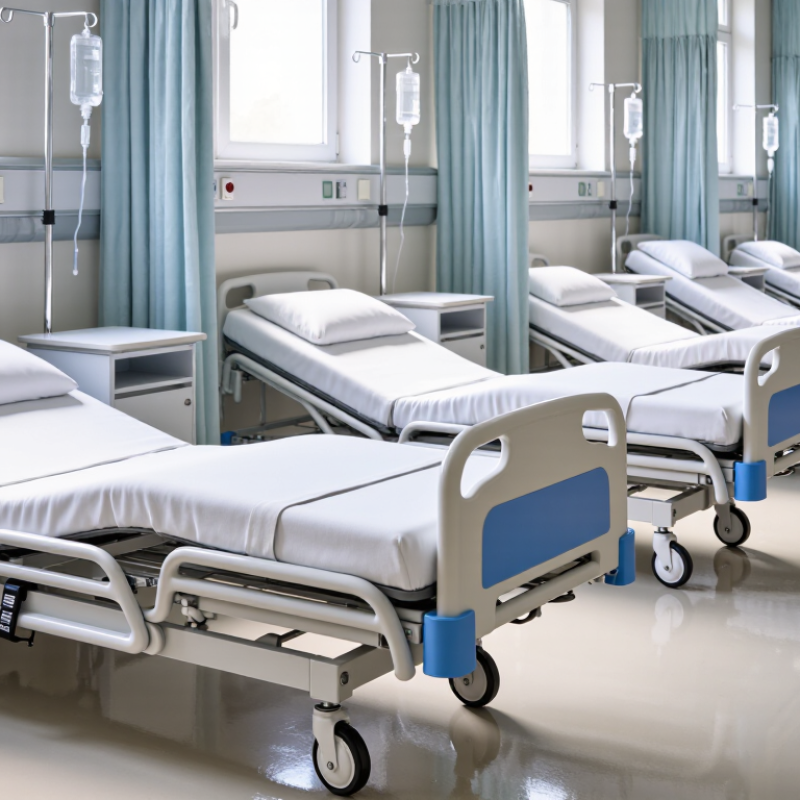
Semi-Fowler positioning raises the upper torso, commonly to 30°–45°, while the knees remain mildly flexed. This angle can support breathing, feeding, aspiration-risk management, and clearer bedside observation. The range is clinically useful, not decorative. A digital angle display helps caregivers reproduce the prescribed position instead of guessing.
The World Health Organization reports that about one in ten patients experiences harm during healthcare delivery, while more than half of harmful events may be preventable. Positioning alone cannot solve this problem. However, a stable semi-Fowler bed can support safer routines when combined with monitoring, repositioning, and individualized care plans.
AHRQ’s 2023 National Healthcare Quality and Disparities Report tracks hospital pressure injuries through Patient Safety Indicator 03, showing why skin protection remains relevant when selecting beds for hospitals and home care.
Look for smooth electric adjustment, lockable casters, emergency flattening, and pressure-redistributing surfaces. Caregivers should confirm the head angle after transfers, meals, or linen changes. Small errors matter.
A 45° setting may improve comfort for one patient but cause sliding for another. Clinical judgment still matters more than a fixed number. Evidence from hospital settings does not always transfer neatly to crowded bedrooms, so home-care assessments should consider room space, caregiver strength, and the patient’s actual breathing and mobility needs.
When selecting a Semi Fowler bed for hospitals or home care, safety begins with more than headrest adjustment. IEC 60601-2-52 defines safety requirements for electrically operated medical beds, including stability, moving parts, load limits, and entrapment risks. The standard supports safer bed design, but it does not replace clinical assessment.
Not even close.
The FDA’s Hospital Bed System Dimensional and Assessment Guidance reported 772 entrapment incidents between 1985 and 2006. These reports included 460 deaths, 136 nonfatal injuries, and 176 cases with unclear outcomes.
Those figures remain a serious warning for caregivers. A suitable bed should match the patient’s size, mobility, diagnosis, and transfer ability.
Rails must not be treated as automatic protection. They can create new hazards when gaps, mattresses, and accessories do not fit correctly.
Before use, inspect the mattress-to-rail gap, locking mechanism, caster brakes, and emergency lowering function. Test the bed with the patient’s actual mattress. Check twice.
Care teams should also follow FDA recommendations for risk assessment, staff training, maintenance records, and regular reassessment. A patient’s condition can change overnight. Home users often miss this point.
Semi-Fowler positioning may support breathing and feeding, yet excessive elevation can increase sliding and shear.
Documentation should record the selected angle, required supervision, and reasons for any rail use. No bed eliminates every risk. Proper evaluation still matters most.
Choosing among the 10 best semi Fowler beds requires more than checking price or appearance. In hospital and home care, capacity should mean the tested safe working load, not the patient’s weight alone. Add mattress, bedding, accessories, and movement. Leave a practical margin.
Compare four key metrics: minimum and maximum height, backrest and knee-rest angles, footprint, and transfer clearance.
A lower platform can support safer transfers, while a higher setting may reduce caregiver strain. Check whether controls are clear, responsive, and reachable from either side.
Measure doorways, bed turning space, and storage areas before ordering.
Small details matter. Look for stable casters, accessible brakes, quiet movement, and a battery system for short power interruptions. Confirm the frame accepts the intended mattress size and side-rail setup.
In clinical practice, a bed that adjusts smoothly often earns more trust than one with more features. However, feature counts can mislead.
My first comparison favored maximum articulation, but a caregiver found the controls confusing during a night transfer. That weakness changed the ranking.
Ask nurses, patients, and family caregivers to test the bed with realistic bedding and transfers. Record observations, not just brochure figures.
For hospitals and high-use clinical care, a semi-Fowler bed should support safe positioning, repeated transfers, and fast cleaning. The best choice is rarely the most expensive one. It is the bed that remains stable after hundreds of daily adjustments.
A five-bed shortlist can include an electric four-section bed, a manual crank bed, a low-height safety bed, a bariatric semi-Fowler bed, and an ICU-compatible bed. The electric four-section model suits wards needing frequent backrest changes between 30 and 45 degrees. A manual crank version offers dependable operation during power interruptions. It requires more staff effort, though. Low-height designs can reduce injury risk during transfers and help shorter patients reach the floor safely. Bariatric beds need reinforced frames, wider platforms, and clearly stated safe working loads. ICU-compatible beds usually provide stronger casters, integrated controls, and easier access for monitoring equipment.
Check more than the adjustment range. Staff should test brake strength, side-rail movement, mattress fit, and cable protection. Smooth surfaces matter because dried fluids can collect around hinges and control panels. The bed should also tolerate repeated disinfecting without cracking or discoloration. In busy units, noisy motors and slow actuators become daily problems.
A practical warning remains. A powered bed is not automatically safer. Poor training can still cause unsafe transfers or trapped lines. Ask for maintenance records, load documentation, cleaning guidance, and service support before purchase. Field conditions may expose weaknesses that a showroom never reveals.
| Rank | Semi-Fowler Bed Configuration | Recommended Setting | Bed Type | Platform Size (L × W) |
Height Range | Backrest Angle | Safe Working Load | Trendelenburg | Key Safety Features | Best Use Case |
|---|---|---|---|---|---|---|---|---|---|---|
| 1 | High-Use Four-Section Electric Bed | Hospital and high-use clinical care | Electric | 220 × 100 cm | 45–78 cm | 0–70° | 250 kg | ±12° | CPR release, brake indicator, 125 mm castors, under-bed clearance | Frequent repositioning, post-operative care, and general wards |
| 2 | Heavy-Duty Bariatric Semi-Fowler Bed | Bariatric wards and extended clinical use | Electric | 220 × 120 cm | 42–77 cm | 0–65° | 300 kg | ±10° | Reinforced frame, central locking, split side rails, CPR backrest release | Patients requiring increased width and higher load capacity |
| 3 | Five-Function Clinical Electric Bed | Acute care and step-down units | Electric | 215 × 100 cm | 40–80 cm | 0–70° | 250 kg | ±12° | Knee adjustment, cardiac chair position, lockable handset, CPR function | Patients who need frequent upper-body and leg positioning |
| 4 | Low-Height Falls-Reduction Bed | Geriatric, rehabilitation, and fall-risk care | Electric | 210 × 100 cm | 25–72 cm | 0–65° | 220 kg | ±10° | Very-low position, four-section deck, locking side rails, castor brakes | Reducing injury risk while maintaining semi-Fowler positioning |
| 5 | Nurse-Controlled Three-Function Bed | Medical wards and high-turnover rooms | Electric | 210 × 100 cm | 40–75 cm | 0–65° | 220 kg | Optional | Nurse panel, manual CPR release, removable head and foot boards | Reliable daily use with straightforward clinical controls |
| 6 | Standard Home-Care Electric Bed | Home care and long-term recovery | Electric | 200 × 90 cm | 40–76 cm | 0–70° | 180 kg | No | Hand control, locking castors, removable rails, washable mattress platform | Daily sleeping, feeding, reading, and caregiver-assisted transfers |
| 7 | Manual Two-Crank Semi-Fowler Bed | Home care with limited power access | Manual | 200 × 90 cm | Fixed 48 cm | 0–70° | 180 kg | No | Foldable crank handles, mechanical backrest lock, four locking castors | Budget-conscious care where height adjustment is not essential |
| 8 | Low-Profile Home Recovery Bed | Older adults and fall-risk home care | Electric | 200 × 90 cm | 28–68 cm | 0–65° | 180 kg | No | Low entry height, independent backrest control, removable assist rails | Safer bed entry and exit in bedrooms or living spaces |
| 9 | Compact Three-Section Care Bed | Small rooms and short-term home recovery | Electric | 190 × 85 cm | 38–72 cm | 0–60° | 160 kg | No | Narrow footprint, locking handset, fold-down rails, easy-clean deck | Apartments, guest rooms, and temporary recovery arrangements |
| 10 | Basic Fixed-Height Semi-Fowler Bed | Low-acuity home care and guest use | Manual | 200 × 90 cm | Fixed 50 cm | 0–60° | 150 kg | No | Manual backrest adjustment, fixed safety rails, four braked castors | Occasional use when advanced positioning is not required |
Choosing among the five best semi-Fowler beds for home care starts with the room, not the catalog. A compact manual bed suits small bedrooms and occasional recovery. A two-function electric bed reduces bending during daily repositioning. A low-height electric model supports safer transfers, especially beside a wheelchair. A foldable frame saves storage space but may feel less stable after repeated setup. A reinforced wide-bed model offers better support for larger users, yet needs more floor clearance. Measure doorways, turning space, and caregiver access first.
Semi-Fowler positioning usually raises the upper body about 30 to 45 degrees. It can improve comfort during meals, reading, and breathing exercises, but clinical advice should guide individual use. The World Health Organization reports about 684,000 fatal falls worldwide each year. AHRQ also estimates 700,000 to 1,000,000 hospitalized patients fall annually in the United States. Home care deserves the same caution. Choose locking casters, firm mattress support, clear controls, and emergency lowering. Bed rails need special care. The FDA warns that rails can create entrapment risks, particularly for confused, weak, or mobile users.
Daily details matter. Look for washable surfaces, quiet motors, simple handset symbols, and a battery backup. Test the lowest height before purchase. Check whether the mattress stays aligned when the backrest rises. A useful bed should make caregiving calmer, not more complicated. Still, no frame prevents every fall. I would reassess rail use, transfer technique, and room clutter after the first week. That uncomfortable review is often missed.
Typical maximum backrest angles for five common semi-Fowler bed configurations. These reference values reflect commonly published specifications; actual measurements vary by model and manufacturer.
How to read the chart: A higher backrest angle can support upright positioning for eating, reading, breathing comfort, and daily care. For home use, also verify room clearance, locking casters, side-rail safety, mattress compatibility, and the bed’s safe working load.
It raises the upper torso approximately 30° to 45°. The knees remain mildly flexed. This position may support breathing, feeding, and bedside observation.
It helps caregivers reproduce the prescribed position accurately. Guessing can create small but meaningful differences. The same angle may not suit every patient.
Look for electric adjustment, lockable casters, emergency flattening, and pressure-redistributing surfaces. Clear controls also reduce confusion during nighttime care.
Check the mattress-to-rail gap, rail locks, mattress fit, and nearby accessories. Rails are not automatic protection. Poor fitting can create dangerous gaps.
No. A 45° angle may improve comfort for one patient but cause sliding for another. Excessive elevation can increase shear and discomfort.
Measure doorways, turning space, storage areas, and caregiver access. Consider room size, patient mobility, body size, and transfer ability.
A manual bed may suit occasional recovery and small bedrooms. A low electric bed can support safer wheelchair transfers. A foldable frame saves storage space but may feel less stable.
Confirm the head angle after transfers, meals, and linen changes. Test caster brakes, emergency lowering, mattress alignment, and battery backup regularly.
No bed removes every risk. Repositioning, monitoring, skin protection, and clear transfer routines remain necessary. I would reassess the plan after one week.
A Semi Fowler Bed is designed to support clinical head elevation of approximately 30°–45°, helping improve positioning, comfort, respiratory support, feeding, and routine patient care. This guide explains the essential features of these beds, including electric or manual adjustment, backrest and leg elevation, safe access, mobility, mattress compatibility, and weight capacity. It also highlights the importance of choosing equipment that aligns with recognized hospital-bed safety requirements, including IEC 60601-2-52 and applicable FDA guidance.
To compare the ten featured beds, the article focuses on four practical metrics: patient capacity, adjustment range, safety functions, and ease of maintenance. The first five options are evaluated for hospitals and high-use clinical environments, where durability, cleaning efficiency, and reliable positioning are priorities. The remaining five are selected for home care, emphasizing compact design, household usability, caregiver access, comfort, and everyday safety. This overview helps readers match bed features to clinical demands, available space, and the patient’s daily care needs.