
Expert articles, hospital procurement standards, and medical device innovations from Gita Mediquip.
Comprehensive guides on NABH accreditation, ICU ergonomics, and patient safety requirements.
Insights and technology updates from India's trusted hospital furniture manufacturer since 1987.
In 2026, intensive care units are moving beyond the traditional hospital bed. The leading Advanced ICU Bed designs combine precise positioning, pressure redistribution, patient monitoring, and safer bedside workflows. This overview examines the major types shaping modern critical care environments.
Electric five-function beds can raise the backrest, knees, and overall frame with controlled accuracy. Low-air-loss and alternating-pressure systems help manage moisture and reduce prolonged skin stress. Rotating and lateral-tilt beds may support pulmonary care, repositioning, and reduced manual handling during complex treatment. Bariatric ICU beds provide stronger frames, wider surfaces, and safer transfer support for larger patients. Smart beds add weight measurement, exit alerts, integrated scales, and connectivity with clinical systems.
The most promising models still require careful evaluation. A rotating feature may assist one patient but complicate tubing management for another. Advanced sensors can improve awareness, yet alarm overload remains a practical concern. Staff training, cleaning access, battery reliability, and emergency release functions deserve equal attention. They are easy to overlook.
This guide compares these bed types through clinical experience, engineering priorities, and evidence-informed procurement criteria. It considers patient safety, caregiver ergonomics, infection-control demands, and total ownership costs. Manufacturers may highlight automation, but hospitals should verify performance through independent testing and frontline feedback. No single bed suits every ICU. The best choice depends on patient acuity, available space, staffing patterns, and local protocols. Technology helps. Judgment remains essential.
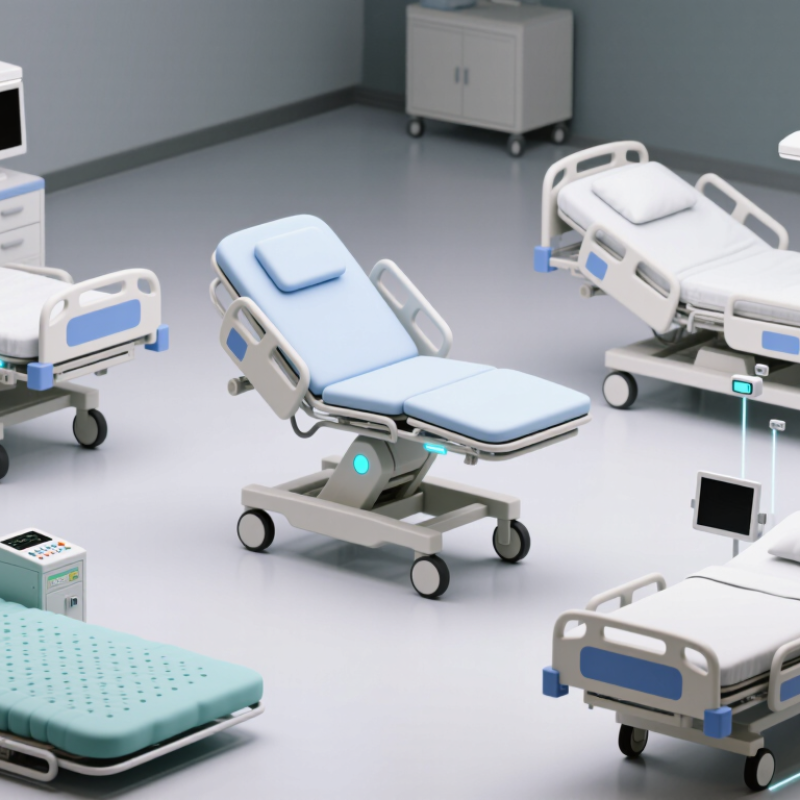
An advanced ICU bed in 2026 should be judged by measurable safety, not by a crowded feature list. IEC 60601-2-52 provides a key framework for medical bed safety, including stability, entrapment risks, and mechanical performance. Procurement teams should request current test evidence and verify the exact bed configuration. A mattress, side rail, or accessory can change the result. Small details matter in practice. During evaluation, inspect caster locks, rail movement, emergency lowering, and cleanable surfaces. Ask clinical engineers to repeat checks after intensive use. Real wards are less gentle than brochures suggest.
A practical ICU criterion is a controlled 30° tilt. It can support positioning workflows, respiratory care, and safer access during procedures, but the angle must be visible and repeatable. Use an independent angle gauge during acceptance testing. Do not rely only on a display. The target working load should reach 227 kg, including the patient, mattress, and permitted accessories. Confirm how the manufacturer defines load. Static capacity is not the same as safe movement. Test braking, elevation, and tilt under realistic loading. This is where some purchasing assumptions fail.
Tips: Build a short checklist before approval. Record tilt accuracy, load limits, alarm behavior, and cleaning time. Involve nurses, biomedical engineers, and infection-control staff. Trial the bed beside monitors and infusion equipment. Leave room for transfer. Recheck results after servicing. I would also document unresolved weaknesses instead of hiding them. No bed solves every clinical problem. Human handling still matters.
This chart highlights two numeric benchmarks specified for the 2026 ICU bed comparison: a 227 kg safe working load and a 30° positioning tilt. IEC 60601-2-52 is shown as the applicable international safety and essential-performance reference standard; it is a compliance requirement rather than a numerical measurement.
For most intensive care units, four-motor electric beds remain the practical baseline. They adjust height, backrest, knee, and overall bed position. These movements support line management, safer transfers, and routine repositioning. A fifth motor adds Trendelenburg or reverse Trendelenburg control. This matters during respiratory support and hemodynamic changes. A sixth motor may provide lateral rotation or assisted turning. It can reduce manual handling, but it also demands careful training.
The 2023 Society of Critical Care Medicine PADIS guidance supports early mobility when clinical safety criteria are met. A 2024 systematic review in Intensive Care Medicine also reported improved physical function with early mobilization, although evidence certainty remained limited.
That limitation matters. A motorized bed cannot replace assessment. Nurses still need to check blood pressure, oxygen needs, sedation, and catheter security before movement.
CPR performance is another dividing point. Four- to six-motor beds should offer rapid backrest flattening, clear access, and intuitive emergency controls. Height adjustment helps staff reach the patient without awkward bending. During real bedside use, complicated controls can slow response. That is an uncomfortable design flaw. Buyers should test the CPR release with gloves, alarms active, and tubing connected.
The AHRQ Making Healthcare Safer III report continues to identify falls and pressure injuries as preventable hospital hazards. Therefore, the better bed is not simply the one with six motors. It is the model that combines stable positioning, verified emergency access, pressure redistribution, and manageable early-mobility workflows.
Rotating ICU beds deserve attention for more than automated movement. A 30°–40° lateral turn can redistribute pressure across the sacrum, heels, and shoulders. It may also support nursing care when patients cannot reposition themselves. However, the angle is not a treatment by itself. Clinical assessment still matters.
Proning support is more significant in severe respiratory failure. The PROSEVA randomized trial, published in the New England Journal of Medicine, reported 28-day mortality of 16.0% with prolonged prone positioning, compared with 32.8% using conventional care. Current European ARDS guidance supports prone positioning for more than 12 hours daily in suitable patients. A rotating bed can reduce manual lifting, but it cannot replace airway checks, tube-length control, or trained staff.
Fall safety needs equal attention. The AHRQ Patient Safety Primer reports approximately 3–5 inpatient falls per 1,000 bed-days. A bed should use low-height positioning, visible movement alerts, side-rail assessment, and slow acceleration. It should also pause when lines become taut.
Small details matter. Yet evidence remains uneven. A 40° turn may improve access for one patient and create discomfort for another. ICU teams should record tolerance, skin condition, oxygen response, and near-falls before adjusting the program.
A practical top-tier bed should offer at least 272 kg capacity, preferably with an additional safety margin. Its usable width often ranges from 42 to 54 inches. That space helps staff reposition patients and manage ventilation equipment without unsafe reaching. A low-air-loss surface with alternating pressure cells can reduce moisture and support vulnerable skin.
The next ranking includes extra-wide ICU beds with reinforced frames and powered repositioning. These beds may provide excellent turning assistance, but pressure relief depends heavily on the mattress system. Static foam alone may not meet the needs of immobile patients.
Check the mattress’s tested weight range, not only the frame rating. Small details matter. Bed length, brake access, rail design, and emergency lowering speed can affect daily care.
Specialized rotation beds can rank highly when pulmonary therapy or frequent repositioning is required. However, their wider mechanisms may reduce clearance in older rooms. Capacity labels can also confuse teams if they exclude monitors, pumps, or bedding. An experienced clinical engineer should verify the complete patient-and-equipment load before purchase.
I would not rank any bed by width alone. A very wide platform may still create pressure points if its air controls are limited or poorly adjusted. Staff feedback after trial use remains essential, because specifications rarely reveal every practical weakness.
In 2026, smart ICU beds are judged by measurable clinical value, not touchscreen features. Continuous weighing can track fluid changes without moving a ventilated patient. It should filter movement, bedding, and equipment loads accurately. Small errors matter during diuresis or rapid resuscitation. Nurses also need a clear reading at the bedside.
IoT alerts can report bed exit attempts, prolonged pressure, brake release, or unusual position changes. Useful systems send prioritized alerts to approved clinical devices. They should avoid flooding staff with low-value notifications. Alarm fatigue remains a practical risk. During evaluation, intensive care nurses should test alerts during real shift conditions. A quiet night may reveal more than a sales demonstration.
UDI supports traceability for the bed and its replaceable components. Staff can scan identifiers during maintenance, cleaning, and equipment transfers. This improves documentation and helps clinical engineering teams verify service history. UDI requirements differ across regions, so local compliance review is necessary. Buyers should also check network security, data ownership, and downtime procedures. One weakness remains easy to miss: connected beds still depend on sensors, batteries, and reliable wireless coverage. A manual weighing method should remain available.
IEC 60601-2-52 offers a key framework for stability, entrapment risks, and mechanical performance. Request current test evidence.
A repeatable 30° tilt supports positioning, respiratory care, and procedural access. Verify the angle with an independent gauge.
Do not rely only on the bed display. Use an angle gauge during acceptance testing and record the measured result.
It should include the patient, mattress, and permitted accessories. Confirm the exact load definition before approval.
No. Test braking, elevation, and tilting under realistic loading. Safe movement may differ from static strength.
A practical high-capacity bed may support at least 272 kg, with extra safety margin. Check the complete patient-and-equipment load.
A usable width of 42 to 54 inches can improve repositioning and equipment access. Excessive width may reduce room clearance.
Low-air-loss surfaces and alternating pressure cells may reduce moisture and support vulnerable skin. Check tested mattress weight ranges.
No. Width does not guarantee pressure relief. Poorly adjusted air controls may still create pressure points.
Inspect caster locks, rail movement, emergency lowering, alarms, and cleanable surfaces. Trial the bed beside monitors and infusion equipment.
They may support pulmonary therapy and frequent repositioning. Check room clearance, mechanism width, and emergency access.
Record tilt accuracy, load limits, alarm behavior, cleaning time, and unresolved weaknesses. Some details are easy to miss.
Nurses, biomedical engineers, clinical engineers, and infection-control staff should participate. Staff feedback reveals practical weaknesses.
Repeat key checks after intensive use and servicing. Real wards are less gentle than brochures suggest.
Choosing the right Advanced ICU Bed in 2026 requires a balanced review of safety, mobility, patient handling, and digital support. Core criteria include alignment with IEC 60601-2-52, a stable 30° tilt capability, and a safe working load of about 227 kg. Four- to six-motor electric beds can provide precise adjustments for respiratory positioning, CPR access, pressure redistribution, and early mobilization. Buyers should also assess control clarity, emergency positioning, locking systems, and ease of cleaning.
Rotating ICU beds that turn approximately 30°–40° may support repositioning and selected proning procedures while reducing manual handling, but fall prevention and secure patient containment remain essential. Bariatric ICU beds should be ranked by capacity near 272 kg, usable width, mattress compatibility, and pressure-relief performance. Smart ICU beds add value through continuous weighing, connected alerts, movement monitoring, and unique device identification. The best choice is therefore the model that combines dependable mechanical performance, patient-centered ergonomics, appropriate capacity, and secure data-enabled monitoring.