

Expert articles, hospital procurement standards, and medical device innovations from Gita Mediquip.
Comprehensive guides on NABH accreditation, ICU ergonomics, and patient safety requirements.
Insights and technology updates from India's trusted hospital furniture manufacturer since 1987.
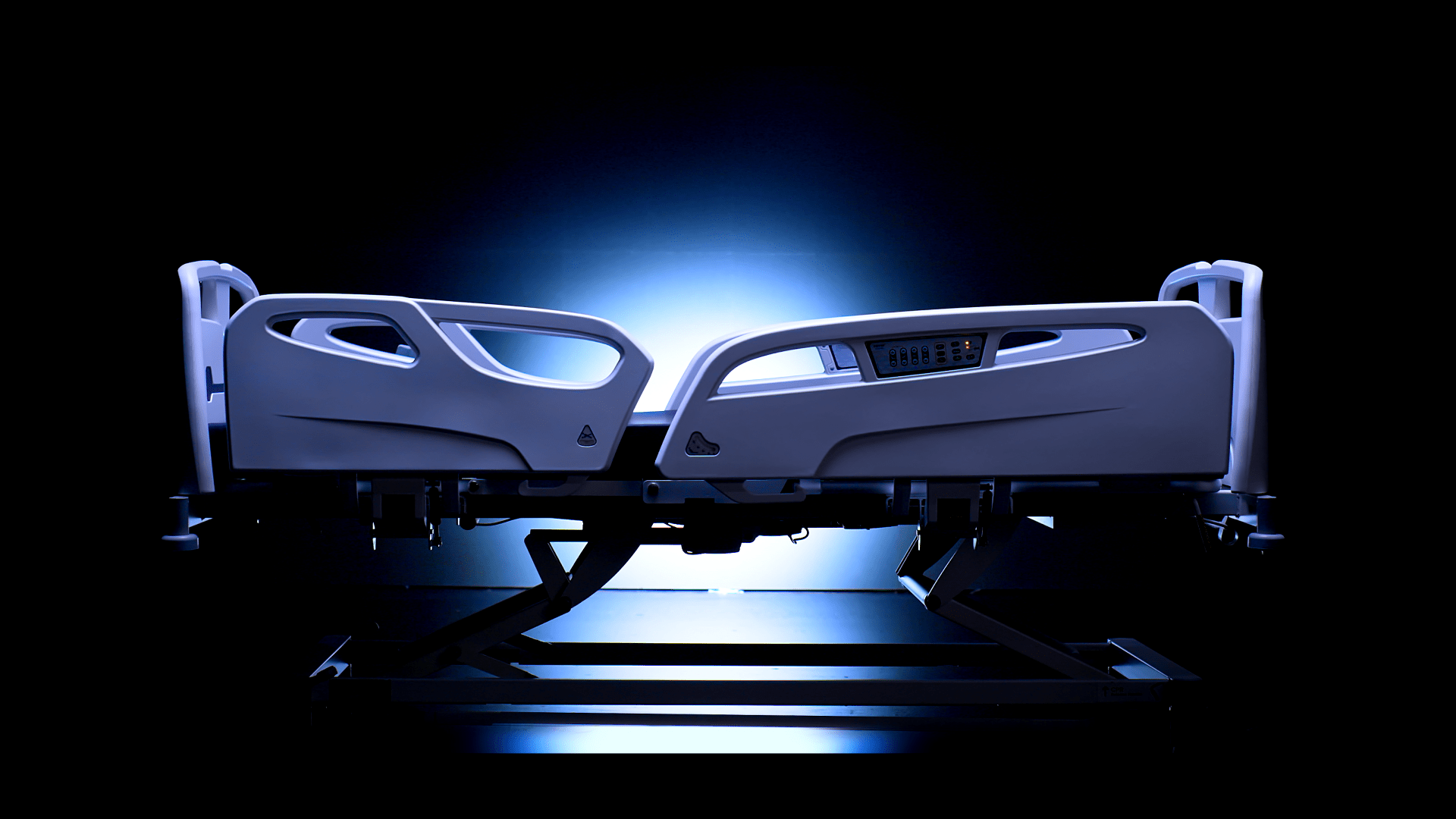
Choosing the 2026 best Hospital Beds requires more than comparing prices, motor counts, or glossy product photographs. Buyers must examine patient safety, caregiver ergonomics, infection-control design, service coverage, and local repair capacity. A bed that looks advanced may become useless when its actuator fails and replacement parts take three months.
The OECD’s Health at a Glance 2023 reported an average of approximately 4.3 hospital beds per 1,000 people across OECD countries. However, national differences remain substantial. Japan reported more than 12 beds per 1,000 people, while Colombia reported fewer than two. These figures show why global buyers need context, not a universal ranking. The World Health Organization’s Global Health Observatory also emphasizes that bed availability does not guarantee effective care. Staffing, oxygen supply, electricity, and clinical workflows matter equally.
Dr. Francesca Colombo, Head of the OECD Health Division, has warned that “resilience requires more than capacity; it requires preparedness and adaptability.” Her observation applies directly to Hospital Beds procurement. A model with integrated weighing, low-height adjustment, and emergency positioning can improve daily care. Yet those features may increase training demands and maintenance costs. That trade-off is easy to overlook.
This guide evaluates leading 2026 options through a practical lens. It considers load capacity, mattress compatibility, electrical safety, cleaning access, warranty terms, and total ownership cost. Some conclusions may remain imperfect. Product data is not always comparable. Regional performance evidence is also limited. Still, careful buyers can reduce avoidable risks by matching each bed to real patient needs, facility conditions, and long-term support.

2026 Best Hospital Beds for Global Buyers?
Global Hospital-Bed Demand in 2026: WHO’s 1-in-6 Ageing Outlook
By 2030, one in six people worldwide will be aged 60 or older, according to the World Health Organization. The WHO also projects 1.4 billion people in this age group by 2030, rising to 2.1 billion by 2050. This shift will increase demand for safer beds in hospitals, rehabilitation centers, and community care settings. Older patients often need easier transfers, stronger fall protection, and better pressure-injury prevention. The demand is real. The exact bed design is not universal.
OECD Health Statistics 2024 shows wide differences in hospital-bed supply across member economies. This suggests that purchasing decisions must reflect local capacity, staffing, room size, and clinical practice. A bed with electric height adjustment may reduce transfer strain, but it also needs reliable power and trained users. Buyers should check safe working load, mattress compatibility, cleaning access, emergency lowering, and spare-part availability. A low purchase price can become expensive when repairs stop care delivery.
Tips: Compare total cost over seven to ten years, not only the quotation. Test the controls with nurses and caregivers. Measure doorways, lifts, and storage areas first. Ask for maintenance records and electrical certifications. WHO’s ageing forecast is persuasive, but it does not remove practical uncertainty. Some facilities may overbuy advanced functions while lacking basic maintenance support. That mistake deserves more attention.
2026 Best Hospital Beds for Global Buyers?
Hospital-Bed Types: Manual, Electric, ICU, Bariatric, and Homecare Models
Choosing a hospital bed starts with patient needs, not appearance or price. Manual beds use hand cranks for backrest, leg, and height adjustments. They are practical where electricity is unreliable and maintenance resources are limited. Electric beds reduce caregiver lifting and offer smoother positioning during long stays. However, motors need inspection, safe wiring, and trained users.
ICU beds support critical care with stronger frames, adjustable sections, emergency positioning, and space for monitoring equipment. Bariatric beds require wider platforms, higher load ratings, reinforced casters, and dependable braking. Never judge capacity by the mattress alone. Homecare models usually fit smaller rooms and may include side rails, removable panels, and quiet controls. They should still allow safe transfers and easy cleaning. No single bed wins.
Tips: Check the patient’s weight, mobility, fall risk, and treatment plan with qualified clinical staff. Measure doorways, elevators, and turning space before ordering. Request load testing, spare-part availability, user training, and maintenance instructions. Confirm electrical compatibility for the destination country. In practice, buyers sometimes focus on features and overlook service access. That mistake can make a suitable bed difficult to use. Safety requirements may also differ by location, so verify applicable healthcare standards with local professionals.
Mattress width is a practical purchasing dimension for room planning, patient comfort, transport access, and caregiver operation. The chart shows representative nominal widths commonly used across international hospital-bed specifications; exact dimensions vary by model and manufacturer.
Standard manual, electric, and homecare beds commonly use mattresses around 90 cm wide. ICU beds are often wider to support critical-care equipment and clinical access, while bariatric beds typically use widths of approximately 120 cm or more for higher patient capacity and comfort.
For global buyers, hospital-bed safety should begin with entrapment control, not upholstery or motor speed. IEC 60601-2-52 defines essential safety and performance requirements for medical beds. Its assessment considers the mattress platform, side rails, openings, and foreseeable patient movement. Buyers should request current test reports, dimensional drawings, and evidence of risk management. A certificate alone may not explain every configuration.
The numbers remain sobering. FDA records identified 803 hospital-bed entrapment incidents from 1985 to January 2009. The reports included 480 deaths, 138 nonfatal injuries, and 185 cases without reported injury, according to FDA bed-system guidance. Those figures are old, but the hazard is not historical. A loose mattress, compressed foam edge, or poorly adjusted rail can create a dangerous gap beside a patient’s shoulder or neck. Measure the complete bed system, not only the frame.
The FDA also emphasizes dimensional assessment and staff training. Installation, maintenance, and mattress compatibility matter. IEC testing may not cover every local accessory or caregiver practice. That is the uncomfortable part. A compliant bed can still become unsafe after modification. Buyers should document rail positions, mattress thickness, cleaning damage, and inspection intervals. Small gaps deserve attention. Reference: FDA Hospital Bed System Dimensional and Assessment Guidance; IEC 60601-2-52.
| Evaluation Dimension | Verified Benchmark or Data Point | Why It Matters to Global Buyers | Recommended Evidence to Request | Assessment | Reference |
|---|---|---|---|---|---|
| Medical-bed safety standard | IEC 60601-2-52 specifies particular requirements for the basic safety and essential performance of medical beds. | Provides a recognized technical framework for mechanical, electrical, functional and patient-safety evaluation. | Current test report or certificate identifying the exact bed model, configuration, standard edition and laboratory scope. | Core requirement | IEC 60601-2-52:2009+A1:2015 |
| Bed-entrapment risk | FDA reported more than 36,000 patients caught, trapped, entangled or strangled in beds from 1985 through 2013; approximately 17,000 were injured and about 700 died. | Demonstrates that entrapment is a major patient-safety hazard, especially for older adults and patients with limited mobility or cognitive impairment. | Entrapment-risk assessment covering the mattress, platform, side rails, headboard, footboard and all bed positions. | High priority | U.S. FDA, Hospital Bed System Dimensional and Assessment Guidance, 2010; data period stated by FDA through 2013 |
| Entrapment zones | Assessment should address the seven commonly evaluated zones around the mattress, side rails, headboard and footboard, including openings created by bed articulation. | Entrapment can occur in more than one location and may appear only when the backrest, knee section or side rails are repositioned. | Dimensional test records for every identified zone in flat, raised, articulated and Trendelenburg-related positions where applicable. | Mandatory check | FDA Hospital Bed System Dimensional and Assessment Guidance; IEC 60601-2-52 |
| Side-rail configuration | Safety evaluation must consider split rails, full-length rails, intermediate positions, gaps between rail sections and gaps between the rail and mattress. | Different rail positions can create different entrapment pathways and can change the effective width of openings. | Rail drawings, gap measurements, locking-force test results and instructions for use for every permitted rail position. | High priority | IEC 60601-2-52; FDA Hospital Bed System Dimensional and Assessment Guidance |
| Mattress compatibility | Entrapment performance is dependent on the complete bed system, including mattress dimensions, thickness, firmness, compression and movement during articulation. | A compliant frame can become unsafe when paired with an incompatible or undersized mattress. | Approved mattress specification, minimum and maximum mattress dimensions, thickness range and compatibility statement. | System-level requirement | FDA Hospital Bed System Dimensional and Assessment Guidance; IEC 60601-2-52 |
| Working load | The stated safe working load should cover the patient, mattress, bedding, accessories and any equipment supported by the bed. | Overloading can affect actuator performance, structural integrity, braking, frame deflection and side-rail geometry. | Declared safe working load, patient-weight limit, overload test report and definition of included accessories. | Compare by model | Manufacturer technical file; IEC 60601-2-52 test documentation |
| Electrical protection | Medical beds with powered functions require evaluation of basic electrical safety and essential performance under the applicable IEC 60601 framework. | Reduces risks associated with electric shock, leakage current, abnormal operation and loss of critical positioning functions. | Electrical safety test report, protection-class information, applied-part classification where applicable and service instructions. | Core requirement | IEC 60601-1 and IEC 60601-2-52 |
| Emergency lowering | Backrest and other powered sections should have a defined emergency-lowering method appropriate to the bed design and intended clinical use. | Rapid access to a safer position may be required during cardiopulmonary resuscitation, power failure or patient deterioration. | Emergency-lowering test, time-to-lower result, battery-backup specification and staff operating procedure. | Clinical safety feature | IEC 60601-2-52; product risk-management file |
| Unintended movement prevention | Bed movement controls should prevent unintended operation, and the bed should provide effective braking or castor-locking arrangements. | Uncontrolled movement can cause falls, transfers, tube disconnections or collisions with surrounding equipment. | Control-lockout design, brake test results, castor specification and instructions for safe transport and stationary use. | High priority | IEC 60601-2-52; manufacturer risk-management documentation |
| Patient fall prevention | Fall risk should be assessed for the lowest bed height, side-rail use, mattress compression, patient transfer and foreseeable misuse. | Side rails are not a substitute for an individualized fall-prevention plan and may introduce entrapment risks when improperly used. | Lowest-height measurement, fall-risk assessment, rail-use instructions and caregiver training materials. | Clinical-use requirement | FDA Hospital Bed System Dimensional and Assessment Guidance; IEC 60601-2-52 |
| Cleaning and infection control | Surfaces, seams, casters, rails and actuator covers should be compatible with the cleaning and disinfecting agents specified for the bed. | Incomplete cleaning instructions or incompatible chemicals can lead to contamination, material damage and premature safety degradation. | Validated cleaning protocol, chemical compatibility list, ingress-protection information and reprocessing instructions. | Operational requirement | Manufacturer instructions for use; applicable healthcare-facility infection-control procedures |
| Alarm and control usability | Hand controls, nurse controls, locking functions and alarms should be clearly identified and usable by the intended caregivers. | Incorrect operation can create unsafe height, tilt, rail or backrest positions. | Usability evaluation, control-lockout matrix, alarm description, language options and translated instructions. | Buyer verification | IEC 60601-1-6; IEC 62366-1; IEC 60601-2-52 |
| Documentation and traceability | Safety claims should be traceable to a specific model, configuration, revision, test method and production status. | Documents issued for a different configuration may not prove safety for the supplied bed. | Declaration of conformity, risk-management file summary, serial-number traceability, test reports and revision-controlled manuals. | Procurement control | ISO 14971; IEC 60601-1; IEC 60601-2-52 |
| Post-market vigilance | Purchasers should review field-safety notices, recalls, incident reporting procedures and corrective-action history before large-scale deployment. | Safety performance can change with service history, accessories, replacement mattresses or configuration updates. | Recent field-action declaration, complaint-handling procedure, preventive-maintenance schedule and spare-part controls. | Lifecycle requirement | Applicable national medical-device vigilance requirements; ISO 14971 |
For global buyers, four metrics deserve close attention: safe working load, backrest angle, height range, and duty cycle. Safe working load must include the patient, mattress, side rails, and attached accessories. A bed rated for 250 kilograms may provide less practical capacity after accessories are added. Backrest movement should support breathing, feeding, examination, and safer transfers. A maximum angle near 70 degrees can be useful, but higher is not always better.
Height range affects staff safety and patient independence. A low position can reduce injury risk during transfers, while a higher position supports nursing procedures. Check the actual minimum and maximum heights, not only the advertised range. Duty cycle shows how often motors can operate without overheating. In busy wards, repeated adjustments may expose weak thermal protection. Ask for test records, cycle limits, and replacement-part availability. Specifications are sometimes unclear. That deserves scrutiny.
Tips: Request a complete SWL calculation, measured backrest angles, and height data under load. Confirm the duty cycle at local voltage and frequency. Test a sample with a mattress and accessories installed. Keep notes from nurses and maintenance staff; their feedback may reveal problems that brochures miss.
For global buyers, hospital-bed evaluation should begin with patient safety, not appearance. The WHO Global Patient Safety Report 2024 states that one in ten patients is harmed during healthcare, with more than half of this harm considered preventable. A reliable bed should support safe transfers, CPR release, side-rail control, and stable caster locking. Test these functions with staff, not only brochures.
ISO 13485 certification is important, but its scope matters. Verify the certificate number, issuing body, expiry date, and covered products. CE documentation should match the applicable EU Medical Device Regulation requirements. For the United States, request FDA registration details and confirm whether 510(k) clearance applies to the specific model. Certificates are not passports. A supplier may pass paperwork checks and still miss a repair deadline.
Service coverage often separates a dependable supplier from a risky one. OECD Health at a Glance 2023 reported an average of 4.3 hospital beds per 1,000 people across OECD countries in 2021, increasing pressure on equipment uptime. Ask for written warranty duration, excluded parts, battery coverage, response times, local technicians, and spare-parts availability. Check compatibility with hospital disinfectants and voltage standards. I would also request failure-rate data from comparable installations. Data can be incomplete, and that weakness deserves attention. A practical factory audit should include bed-cycle testing, emergency lowering, noise checks, and a documented complaint process.
Match the bed to patient weight, mobility, fall risk, and treatment needs. Measure doorways, elevators, and turning areas first. A perfect bed may not enter the room. Consult qualified clinical staff before ordering.
Manual beds use hand cranks for backrest, leg, and height adjustments. They suit locations with unreliable electricity or limited maintenance support. They need more caregiver effort. That trade-off is easy to underestimate.
Electric beds offer smoother positioning during long stays. They can reduce caregiver lifting during care and transfers. Motors require inspection, safe wiring, and trained users. Controls should remain easy to reach.
ICU beds usually have stronger frames and adjustable sections. They support emergency positioning and monitoring equipment. Check rail movement, brake reliability, and clearance around equipment. Critical care demands dependable access.
Bariatric beds need wider platforms, higher safe working loads, and reinforced casters. Reliable braking is essential during transfers. Calculate capacity using the patient, mattress, rails, and accessories. The mattress rating alone is insufficient.
Assess the complete system, including the mattress, platform, rails, and openings. A loose mattress or compressed edge can create a dangerous gap. Measure spaces near the shoulder and neck. Small gaps matter.
Review safe working load, backrest angle, height range, and motor duty cycle. Measure the actual height under load, not only the advertised range. A backrest angle near 70 degrees may support feeding and examination. Higher is not automatically better.
Request dimensional drawings, current safety test reports, load-testing records, and maintenance instructions. Confirm spare-part access, user training, and electrical compatibility. Record mattress thickness and rail positions during inspection. A certificate may not explain every configuration.
In 2026, global demand for Hospital Beds is expected to grow as ageing populations increase healthcare needs and many regions expand clinical and homecare capacity. Buyers should understand the differences between manual, electric, ICU, bariatric, and homecare models, selecting equipment according to patient condition, care setting, staff requirements, and available infrastructure. Safety should remain a primary consideration, with attention to IEC 60601-2-52 principles, bed-rail design, patient entrapment prevention, and safe adjustment functions.
A practical purchasing evaluation should compare safe working load, backrest angle, height range, mattress-platform design, electrical reliability, and duty cycle. Global suppliers should also be assessed through relevant quality-management certifications, regulatory documentation such as CE or FDA requirements where applicable, warranty terms, spare-parts availability, training, and local service coverage. A well-planned procurement strategy balances patient safety, clinical performance, lifecycle cost, maintenance support, and suitability for the target healthcare environment.